Services

Events & Experiences
Enterprise & Training
Gaming & Education


A technical, layer-by-layer breakdown of how modern experience centre technology works, sensors, displays, show control, and IT integration, and what it means for anyone briefing a project in Dubai, Abu Dhabi, Saudi Arabia, Qatar or Oman.

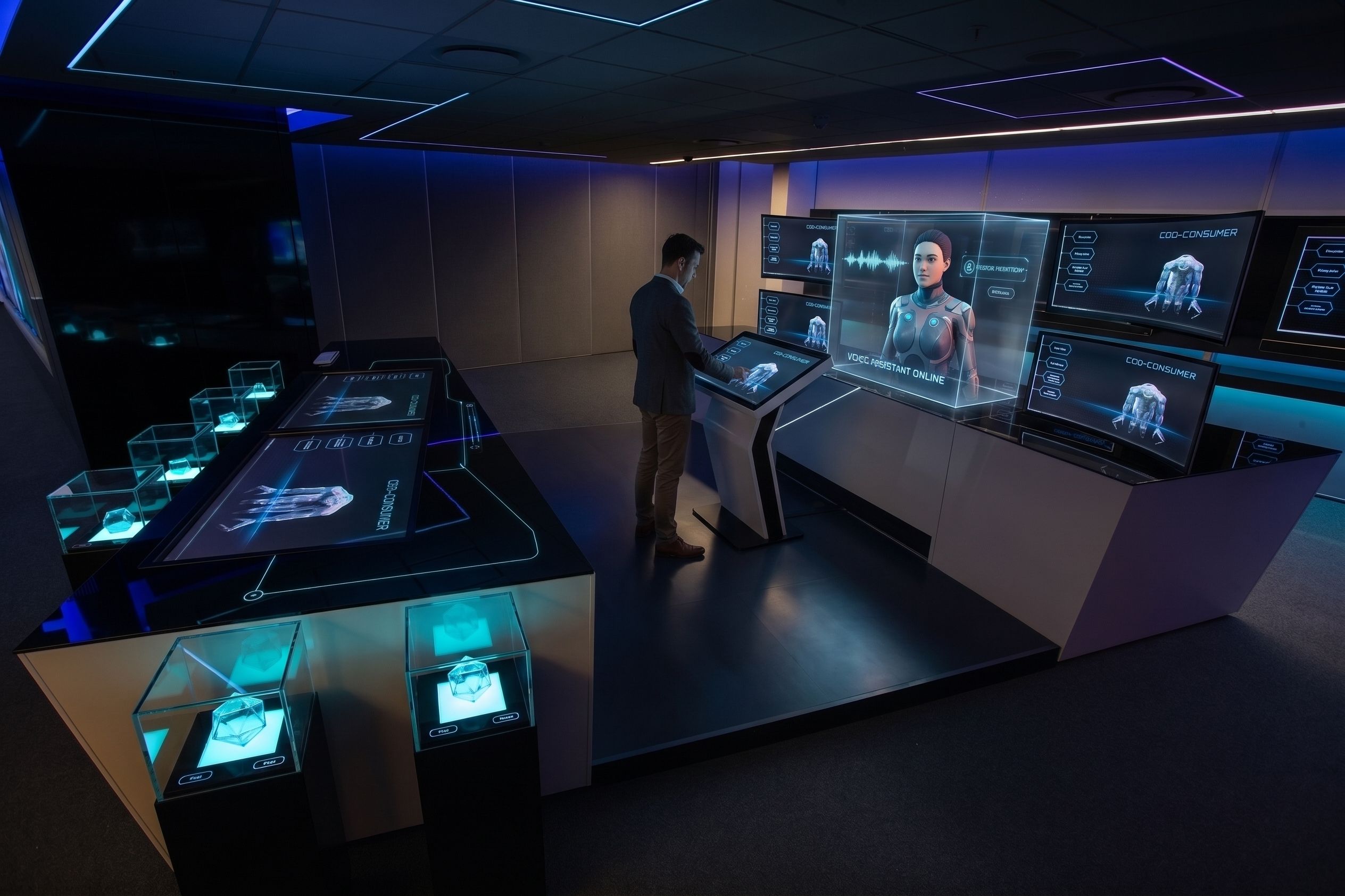
This guide goes under the hood: how each layer actually works, how they're wired together, what changes when you're building in the GCC specifically, and what a technically credible partner should be able to explain to you before you sign a contract. If our companion piece, The Complete Guide to Experience Centers, answered what and why, this one answers how.
QUICK ANSWER: Experience centre technology is built from five layers working together: a sensing layer that detects visitors, a display layer that shows content, a control layer that orchestrates everything in sync, a content layer that manages what's shown, and a network/IT layer that connects it all reliably. Every interactive moment a visitor experiences is these five layers acting in concert, usually within milliseconds.
1. The sensing layer - how the system knows a visitor is there and what they're doing. This ranges from simple motion and proximity sensors to LiDAR depth-sensing, computer vision, capacitive touch, and RFID, each suited to a different kind of interaction.
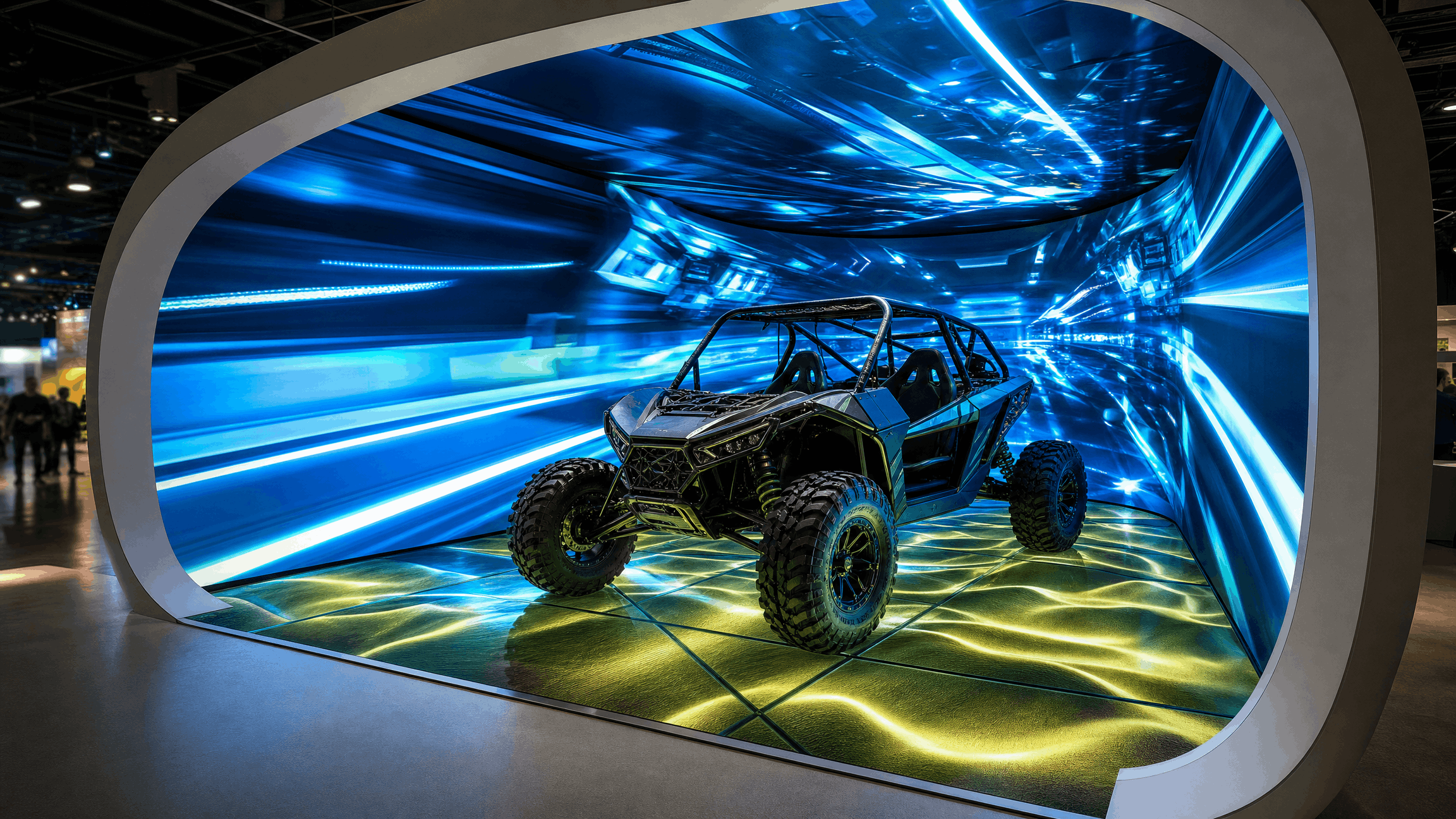
2. The display/output layer - what the visitor actually sees and hears: LED walls and fine-pitch displays, projection and projection mapping, touchscreens, spatial audio, and increasingly holographic or transparent displays.
3. The control/orchestration layer - the software brain, usually a show control platform, that receives sensor input and triggers the correct sequence across every display, audio zone, and physical system at once. This is what makes a "moment" feel instantaneous rather than a series of separately-triggered devices.
4. The content layer - the content management system (CMS) that stores, schedules, and updates what's shown, ideally without needing a developer every time content needs to change.
5. The network/IT layer - the structured cabling, networking, and increasingly cloud infrastructure that connects every device, and, in more advanced builds, the layer that integrates with building management, access control, and environmental systems for a genuinely unified space.
Hardware and software across these layers typically need to synchronize at millisecond precision, interactive elements that respond with perceptible lag break the illusion of a responsive space almost instantly, which is why systems integration, not any single component, is where most of the engineering effort in an experience centre actually goes.
QUICK ANSWER: Good experience centre technology is specified after the visitor journey is designed, not before. Each moment in the journey, entry, exploration, interaction, climax, exit, is mapped to a specific combination of sensing, display, and control technology chosen to deliver that specific moment, rather than a generic set of screens applied uniformly across the space.
Take a typical journey structure and what technology sits behind each beat:
QUICK ANSWER: The core technology systems inside a modern experience centre are sensors and tracking (LiDAR, motion, RFID, computer vision), display systems (LED, projection, touchscreens), a unified control platform, a content management system, and network/IT infrastructure that ties everything together and, increasingly, into building management systems.
| System | What It Does | Common Technology |
|---|---|---|
| Sensors & Tracking | Detects visitor presence, movement, and interaction | LiDAR, motion/PIR sensors, RFID, computer vision, capacitive touch |
| Display & Output | Presents visual and audio content | Fine-pitch LED, projection/projection mapping, touchscreens, spatial audio |
| Unified Control Platform | Orchestrates every system from one interface, often preset "scenes" | Crestron-style AV control, show control platforms (Medialon, Q-SYS, Alcorn McBride) |
| Content Management System | Stores, schedules, and updates content without re-engineering the system | Custom or platform CMS, often cloud-connected for remote updates |
| Network & IT Infrastructure | Connects every device reliably, increasingly integrates with building systems | Structured cabling, IP networking, cloud connectivity, BMS integration |
Type card - Sensors & Tracking: The layer that makes an experience feel personal rather than scheduled. LiDAR sensors track guest movement to trigger show control elements with genuine precision; wireless mesh and IoT-enabled sensors add flexibility for retrofits and remote monitoring.
Type card - Unified Control Platforms: A single interface, often a touch panel or tablet, that can switch the entire space between preset "scenes": a high-energy launch mode, a quiet one-on-one consultation mode, a hybrid mode with remote participants, without touching individual devices.
Type card - Content Management Systems: What separates a space that stays fresh for years from one that looks dated within months. A well-built CMS lets non-technical staff update content, swap languages, or refresh a campaign without calling the original integrator back in.
Type card - Network & IT Convergence: The least visible, most foundational layer. Modern experience centres increasingly integrate AV with building management, access control, and environmental systems into one consolidated platform, letting a single team manage the entire guest experience, not just the screens.
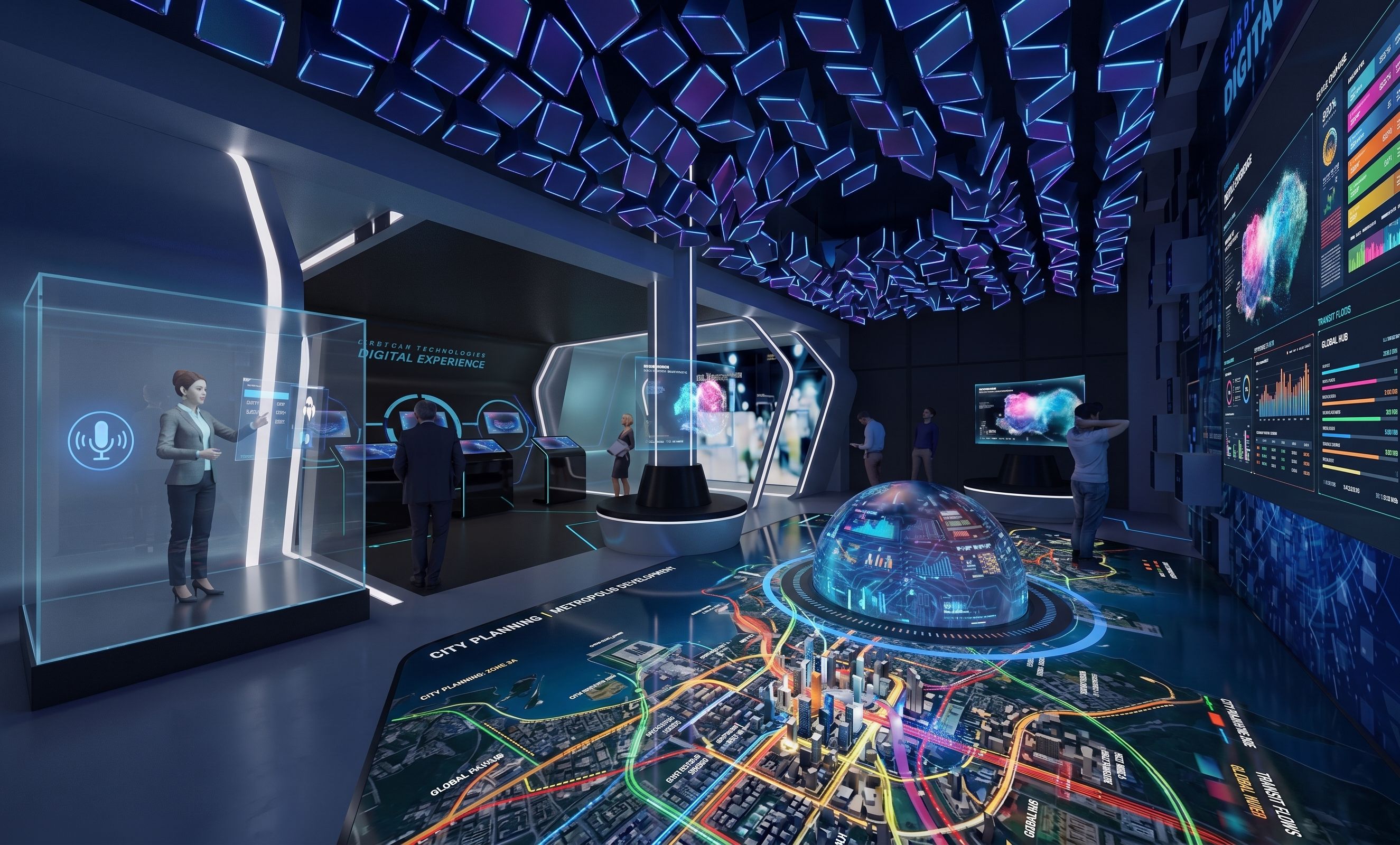
QUICK ANSWER: Show control is the orchestration layer that receives input from sensors and ties every display, audio, lighting, and physical system to a single synchronized cue, so a visitor's action triggers a coordinated response across the whole space instead of separate systems firing independently. It's the technical reason an experience centre feels like one seamless moment rather than a room of unrelated screens.
Without show control, every system in an experience centre, lighting, audio, displays, sensors, robotics, would need to be triggered and timed independently, in practice, unreliable and often visibly disjointed. Show control solves this by acting as the central logic layer: a visitor sensor fires, the show control system receives that trigger, and a programmed "cue" fires every connected system in the correct sequence and timing, typically to within a video frame of accuracy.
This is genuinely specialist engineering, not a configuration checkbox, which is why we've written a dedicated deep-dive on it. For the full technical breakdown of protocols (DMX, OSC, timecode), platforms, and how show control is scoped and costed, see our companion guide: The Complete 2026 Guide to Show Control Systems.
QUICK ANSWER: Building experience centre technology in Dubai, Abu Dhabi, Saudi Arabia, Qatar, or Oman involves region-specific technical factors most standard specifications don't account for: extreme heat and humidity affecting hardware reliability, multilingual (Arabic/English, and often others) content architecture, government network security requirements for public-sector projects, and import/logistics timelines for specialist hardware.
Outdoor and semi-outdoor installations across the GCC face sustained high heat and humidity for much of the year. Display and sensor hardware needs appropriate IP ratings and cooling design specified from day one, retrofitting climate resilience after installation is far more expensive than designing for it upfront.
Almost every experience centre in the region needs to run in Arabic and English at minimum, often with additional languages for tourism-facing projects. This isn't a translation task, it's a content management and UI architecture decision that needs to be built into the CMS from the start, including right-to-left layout support for Arabic interfaces.
Projects for government entities and semi-government developers, common across Dubai, Abu Dhabi, and Saudi Arabia's giga-projects, often carry specific network security, data residency, and approval requirements that a technology partner needs direct experience navigating, not learning on the job.
Specialist AV and show control hardware is rarely manufactured in the GCC, meaning import timelines, customs, and regional stock availability materially affect project schedules. A partner with established regional supply chains delivers meaningfully faster than one sourcing hardware fresh for every project.
Ramadan operating-hour changes, extreme summer footfall patterns (many attractions see visitation shift toward evening hours), and government approval cycles all affect how a system needs to be commissioned, tested, and staffed, factors a regionally experienced partner plans for by default.
QUICK ANSWER: The technology trends most affecting experience centres in 2026 are IoT-enabled persistent visitor profiles (the space "remembering" a returning visitor), AI assistants providing natural-language guidance, computer-vision-based interaction replacing simpler motion sensors, and deeper convergence between AV systems and building management platforms.
Persistent visitor profiles via IoT - Rather than treating every visit as anonymous, IoT integration increasingly lets an experience centre recognize a returning visitor (via app, badge, or booking data) and build on a previous interaction rather than starting over.
AI assistants and natural-language guidance - AI-driven assistants are starting to answer visitor questions directly and route them to relevant content, reducing reliance on printed signage or staff for wayfinding and information.
Computer vision over simple motion sensing - Where older installations relied on basic motion or proximity triggers, computer vision and LiDAR now allow far more nuanced interaction, distinguishing between a passing visitor and one actively engaging, and adjusting content accordingly.
AV/IT/building-systems convergence - The technical trend underneath all the others: AV, IT networking, and building management are increasingly specified and managed as one converged system rather than three separate vendor scopes, reducing integration risk and long-term maintenance complexity.
QUICK ANSWER: A strong experience centre technology brief specifies the visitor journey and desired moments first, then lists every existing system that needs to integrate, states language and content-update requirements, flags any government or security constraints, and asks the partner directly how they handle GCC-specific logistics, climate, and commissioning.
Step 1, Lead with the journey, not the hardware list. Describe what should happen at each stage of the visit. A capable partner will translate that into a technology specification; a weaker one will ask you to specify the hardware yourself, a sign they're not equipped to lead the technical design.
Step 2, Inventory what already exists. Any existing AV, network, building management, or access control systems that need to integrate should be documented upfront, retrofitting integration after a system is built is far more expensive than designing for it.
Step 3, Specify language and content-update requirements clearly. State every language the system needs to support and how often content will change, this directly shapes the CMS architecture required.
Step 4, Flag security, data, and approval constraints early. Government and public-sector projects in particular should surface any network security or data residency requirements at the brief stage, not after design has started.
Step 5, Ask about regional delivery capability directly. Ask how the partner handles GCC import logistics, climate-appropriate hardware specification, and local commissioning. A vague answer here is a real risk indicator for project delays later.
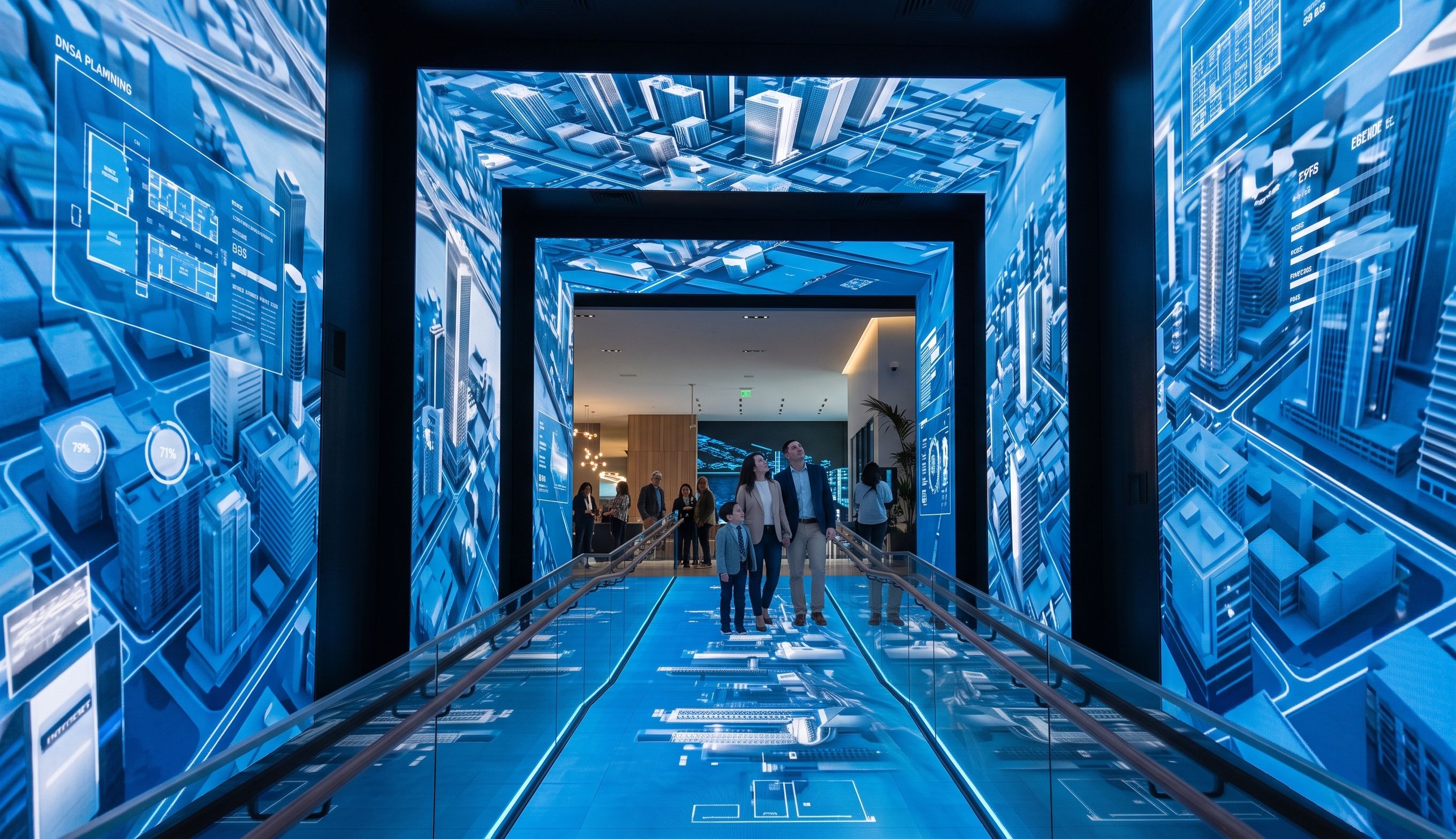
QUICK ANSWER: Within an experience centre's overall budget, the technology-specific cost drivers are sensor and tracking complexity, display resolution and pitch, how much custom software and content-management development is required, and how many separate systems need to be integrated into one control platform. Off-the-shelf components cost far less than fully custom, integrated systems.
01 - Sensor & tracking complexity. Basic motion sensors are inexpensive; LiDAR, computer vision, and multi-user tracking systems capable of handling several simultaneous visitors without cross-triggering cost significantly more in both hardware and calibration time.
02 - Display resolution & pitch. Fine-pitch LED (tighter pixel spacing, sharper close-up viewing) costs substantially more per square metre than coarser-pitch panels suited to longer viewing distances, matching pitch to actual viewing distance is a real cost lever, not just a spec upgrade.
03 - Custom software & CMS development. A bespoke content management system built around your specific content-update workflow costs more upfront than an off-the-shelf platform, but saves substantially on every future content refresh.
04 Systems integration depth. The more separate systems (AV, sensors, show control, building management, access control) need to be unified into one control platform, the more integration engineering, and testing time, the project requires.
The only reliable way to understand where your specific project sits on these levers is a tailored technical consultation based on your actual space, systems, and content ambitions.
QUICK ANSWER: Power Interactive designs, integrates, and commissions experience centre technology, sensors, display, show control, content management, and network infrastructure, in-house, for clients across Dubai, Abu Dhabi, Saudi Arabia, Qatar, and Oman, with 800+ delivered projects since 2018, engineered specifically for the region's climate, multilingual requirements, and government compliance needs.
Most experience centre projects fail on integration, not on any single piece of hardware. A projector, a sensor, and a show control platform can each work perfectly in isolation and still produce a disappointing result if the team assembling them hasn't engineered the handoffs between layers. That integration discipline is where Power Interactive's in-house model earns its value.
One technical team across every layer. Sensing, display, show control, content management, and network infrastructure are specified and delivered by the same team, not handed between subcontractors with different priorities and different definitions of "done."
Engineered for GCC operating conditions from day one. Climate-appropriate hardware specification, bilingual (and multilingual) CMS architecture, and government network compliance are built into the design process from the first consultation, not addressed as change orders later.
Regional supply chain and commissioning experience. Established import logistics and on-the-ground commissioning teams across the UAE, Saudi Arabia, and Oman reduce the delivery risk that trips up partners new to the region.
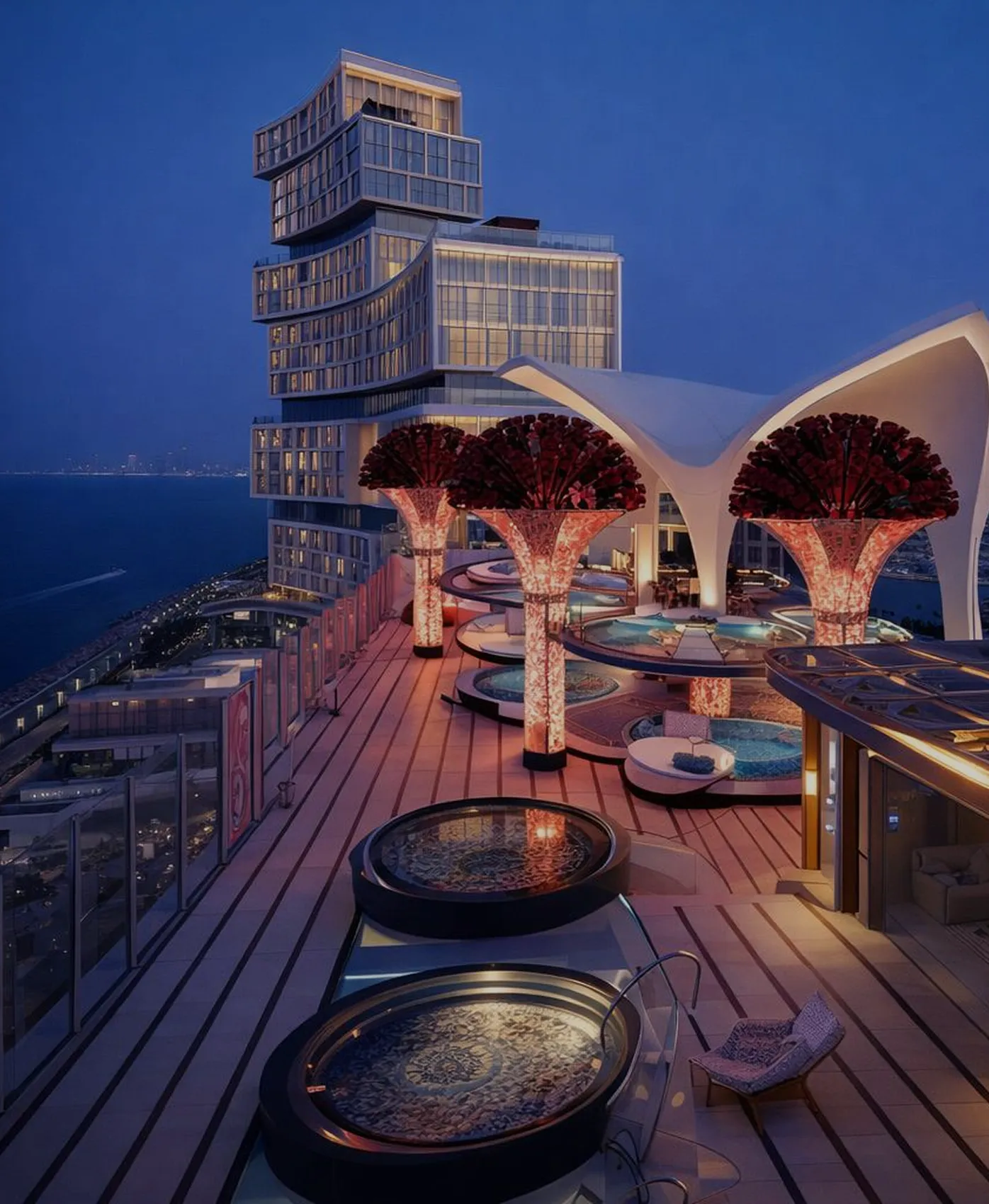
A track record proving the model works. 800+ delivered projects since 2018 for clients including DEWA, the Government of Dubai, Atlantis The Royal, Emaar, Adidas, Louis Vuitton, Gucci, and Hugo Boss.


It works as five layers acting together: sensors detect a visitor and their actions, displays present content, a show control platform orchestrates every system in sync, a content management system controls what's shown, and network infrastructure connects it all reliably, usually responding within milliseconds of a visitor's action.
General AV control typically manages audio-visual equipment in isolation, volume, source switching, display power. Show control sits above that, synchronizing AV together with sensors, robotics, and other physical systems on one coordinated timeline, so multiple systems respond to a single trigger as one event.
Common sensor technologies include LiDAR for precise depth and movement tracking, motion and proximity sensors for basic triggers, RFID for badge or object-based interaction, computer vision for nuanced visitor behavior detection, and capacitive touch for direct interaction surfaces.
Not always, but a well-scoped CMS, custom or platform-based, is what allows non-technical staff to update content, swap languages, or refresh campaigns without re-engineering the system every time, which matters most for permanent installations expected to stay current for years.
Full experience centre development, from strategy and design through technology integration and testing, typically takes 6 to 18 months depending on scope, with larger multi-system, multi-language builds sitting toward the longer end.
Climate and humidity affecting hardware reliability, bilingual or multilingual content architecture (Arabic and English at minimum), government network and data-residency requirements for public-sector projects, and import logistics for specialist hardware all materially affect design and timeline in the region.
Often, yes. Modern experience centre architecture increasingly converges AV, IT networking, and building management systems into one platform, meaning existing infrastructure can frequently be integrated rather than replaced, if it's documented clearly at the briefing stage.

.png)
.png)
Power Interactive is a Dubai-based experiential technology company, building immersive experiences, interactive installations and Pro AV systems for clients across the UAE, Saudi Arabia and the GCC.