Services

Events & Experiences
Enterprise & Training
Gaming & Education


A practical, step-by-step breakdown of how to design an immersive visitor journey, mapping, sensory technology, AV integration and show control, and what it means for anyone briefing an experience centre or attraction project in Dubai, Abu Dhabi, Saudi Arabia, Qatar or Oman.

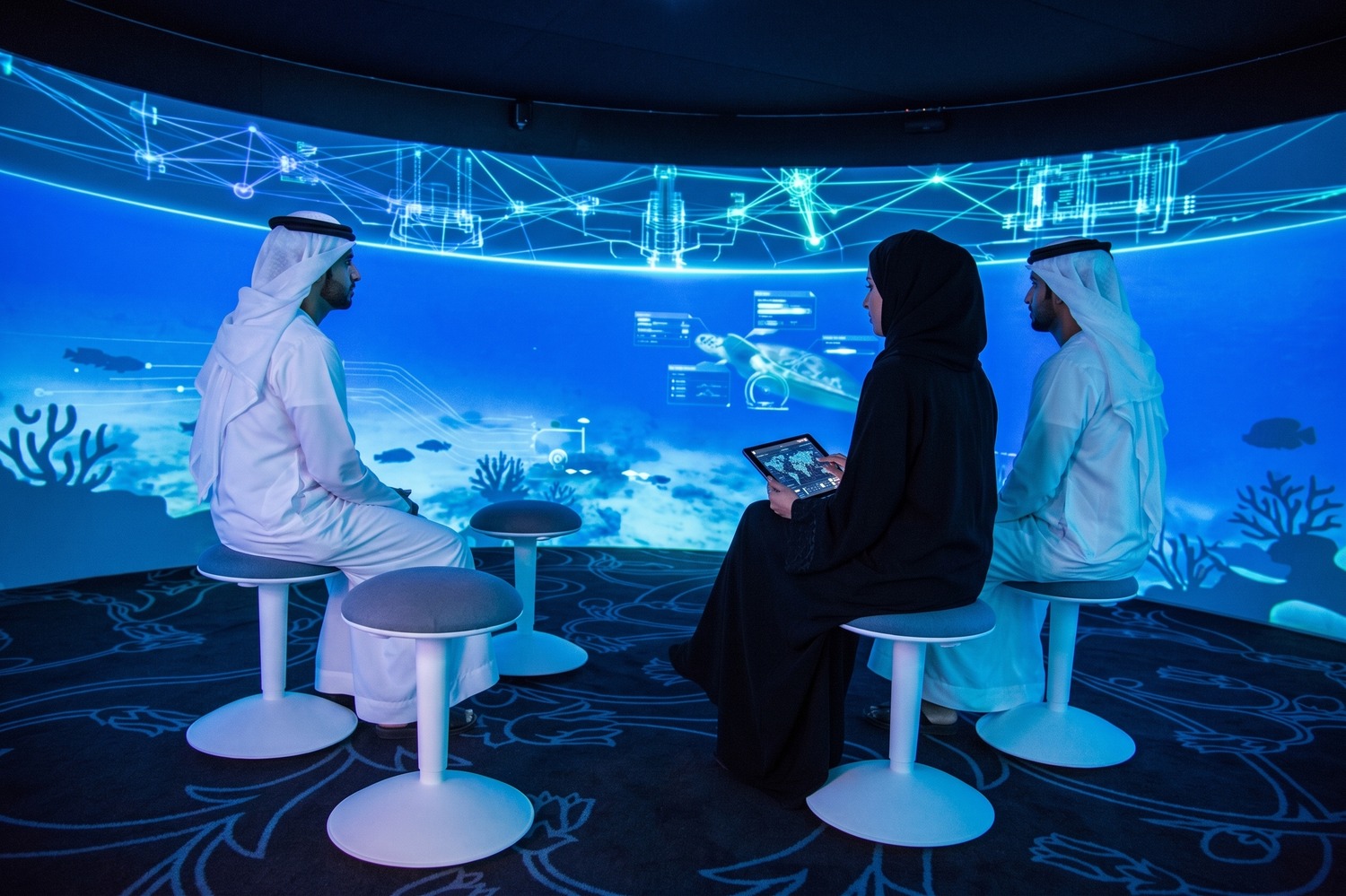
A visitor walks into a museum, an experience centre, or a giga-project pavilion. What happens in the next ninety minutes where they look first, what stops them, what they remember, what they post, what they tell their friends, is not an accident. It is the result of a journey that someone designed, deliberately, moment by moment, before a single screen or speaker was ever specified.
That is visitor journey design: the discipline of mapping a visitor's path through a physical space, emotionally, physically, and technologically, so that every zone, transition, and interaction builds toward a specific outcome, whether that's education, brand affinity, ticket revenue, or a five-star review.
This article is a working framework, not a theory piece. It walks through the exact steps a design and delivery team should follow to build a visitor journey that holds up in the real world from a blank floor plan to a fully commissioned, AV-integrated experience and it explains, in detail, how Power Interactive applies this methodology on projects across Dubai, Abu Dhabi, Riyadh, Jeddah, Muscat, and Doha.
Visitor journey design borrows its core logic from customer journey mapping in digital and retail experience, but applies it to physical, spatial, multi-sensory environments, museums, experience centres, branded pavilions, giga-project visitor attractions, and cultural destinations.
At its core, it involves identifying every touchpoint where a visitor interacts with a space, from the moment they see a marketing post or book a ticket, to the moment they walk through the door, move through each zone, and leave, and deliberately designing what they should think, feel, and do at each one.
Most frameworks split the journey into three stages:
The on-site portion is where technology, show control, and AV integration do the heaviest lifting, and it's the part this article focuses on in depth.
The single most common failure point in experience centre and museum projects in this region is sequencing: teams select the technology, a video wall, a projection-mapping system, a VR pod, before they've mapped what the visitor is supposed to feel or do at that point in the journey.
The better approach, and the one used by leading AV integrators globally, is to think about the visitor's journey before the technology. At the awareness stage, large-format immersive storytelling makes the first impression; at the mid-journey stage, interactive and data-rich content answers specific questions and builds engagement; at the closing stage, the technology should support a clear, memorable takeaway moment. Each zone of a well-designed space has a defined narrative role, and only once that role is defined should the AV and interactive technology for that zone be specified.
Skipping journey design and jumping straight to hardware produces a common, expensive symptom: technically impressive rooms that don't add up to a coherent story. Visitors remember disconnected "wow moments" rather than a journey, and operators end up with expensive systems that don't move the metrics (dwell time, satisfaction scores, conversion, repeat visits) they were built to move.
This is the practical sequence we recommend, and the one we run internally at Power Interactive, for turning a blank floor plan into a fully mapped, technology-ready visitor journey.
Before any spatial design starts, define what the journey needs to achieve: education, brand conversion, ticket revenue, dwell time, social sharing, or a mix. Define the primary audience segments (families, school groups, corporate delegations, tourists, VIP guests) since each moves through space differently and responds to different pacing. Assign measurable success metrics, average dwell time per zone, completion rate through the full journey, satisfaction score, social share rate, so the journey can be evaluated after launch, not just admired.
Walk the floor plan (or the architectural drawings, for pre-construction projects) and identify the natural, unforced path a visitor's body will take: entry points, choke points, sightlines, ceiling heights, natural light, queuing areas, and exit routes. Good journey design works with a building's physical logic, not against it, fighting the architecture with signage and barriers is a sign the journey wasn't designed at the floor-plan stage.
Break the journey into distinct narrative "chapters" or zones, the same logic that structures leading regional attractions like Dubai's Museum of the Future, which sequences visitors through distinct thematic floors rather than one undifferentiated hall. For each beat, define: What is the visitor learning or feeling here? What is the one thing they should remember? Identify 2–3 genuine emotional peaks across the full journey, the moments designed to be the ones visitors photograph, talk about, and return for. Not every zone can be a peak; peaks work because they're contrasted against calmer connective zones.
Only now does technology enter the framework. For each narrative beat, define which senses are engaged and which technology layer delivers it: large-format projection or LED for scale and spectacle, spatial audio for immersion and wayfinding, interactive touch or gesture systems for agency and engagement, sensor-driven reactive environments (LiDAR, motion, RFID) for personalization, and show control/timecode systems to synchronize all of it. This step converts the narrative plan into a technical brief the AV integration and show control team can design against.
Transitions are where most journeys break down. A jarring cut from a dark, immersive theatre into a brightly lit corridor kills the emotional momentum a designer just built. Deliberately design the pacing, lighting, and audio bridge between zones — decompression corridors after intense moments, anticipation-building approaches before a peak moment, with the same rigor applied to the zones themselves.
Before committing to final technology procurement, walk the mapped journey physically (or in VR/digital twin form for early-stage projects) with a cross-functional team, curators, operators, marketing, and the AV integrator, and, where possible, with representative visitors. Test crowd flow at capacity, not just at a comfortable single-visitor pace; queuing and group-size behavior change the journey's real-world performance dramatically.
This is where AV integration, show control programming, content production, and systems commissioning happen, covered in full detail in Section 5 below, since this is the step where Power Interactive's own methodology adds the most value.
A visitor journey is not "finished" at opening day. Instrument key zones with engagement analytics, dwell time by zone, interaction rates on touch and gesture stations, queue and flow data, and use that data to refine content, pacing, and staffing in the first 90 days, then on an ongoing cycle.
This is the part of the process where a well-mapped journey either becomes a working, reliable, commercially successful experience or stays a beautiful concept deck that never quite performs the way it was designed to. Power Interactive's role sits specifically at this junction: we take a journey map (whether we've built it with the client from Step 1, or inherited it from an architect or exhibition designer) and turn it into an integrated, commissioned, operable system.
5.1 Discovery and Systems Audit. Every engagement starts with a technical discovery phase alongside the narrative journey mapping: site surveys, structural and power/data infrastructure review, existing systems audit (for retrofits and experience centre refreshes), and stakeholder workshops with curators, operators, marketing, and facilities teams. The output is a technical brief that maps every narrative beat from the journey design to a specific systems requirement display technology, audio zoning, sensor placement, network and power infrastructure.
5.2 Integrated Systems Design. Rather than treating AV, lighting, show control, and interactive technology as separate vendor scopes, we design them as one integrated system from the start. A projection-mapped surface, a spatial audio bed, a motion sensor triggering a content change, and a lighting cue all need to fire from the same show control backbone, using protocols like DMX-512, Art-Net, sACN, and OSC, so that a single cue list drives the entire visitor experience for that beat, rather than three separate systems that happen to run near each other.
5.3 Content and Interaction Design. Content is built directly against the journey's narrative beats and emotional peaks defined in Steps 3 and 4 of the framework above, not as generic footage retrofitted to fill screens. Interactive layers (touch, gesture, RFID-personalized content, computer vision) are scoped specifically to give visitors agency at the moments the journey design calls for it, rather than being scattered wherever a screen exists.
5.4 Integration, Show Control Programming, and Testing. This is the technical heart of delivery: physically installing displays, audio, sensors, and control infrastructure, then programming the show control system so every element, media playback, lighting, audio, motion, environmental effects, fires in perfect synchronization with the visitor's physical movement through the space. Systems are tested under real crowd-flow conditions (per Step 6 of the framework) before opening, including edge cases: what happens when three tour groups arrive at once, or a sensor is temporarily obstructed.
5.5 Commissioning, Training, and Live Support. Delivery isn't complete at "systems on." We commission the full experience against the original journey brief, train the client's operations team to run and troubleshoot the show day-to-day, and provide ongoing technical support so the experience performs as designed for years, not just on opening night.
The result of this methodology, applied across 500+ delivered projects for clients including DEWA, the Government of Dubai, Atlantis The Royal, Emaar, and major global brands, is that the technology never becomes the story, the visitor's journey is. AV integration and show control are the invisible infrastructure that make a designed journey feel effortless and inevitable, rather than assembled.
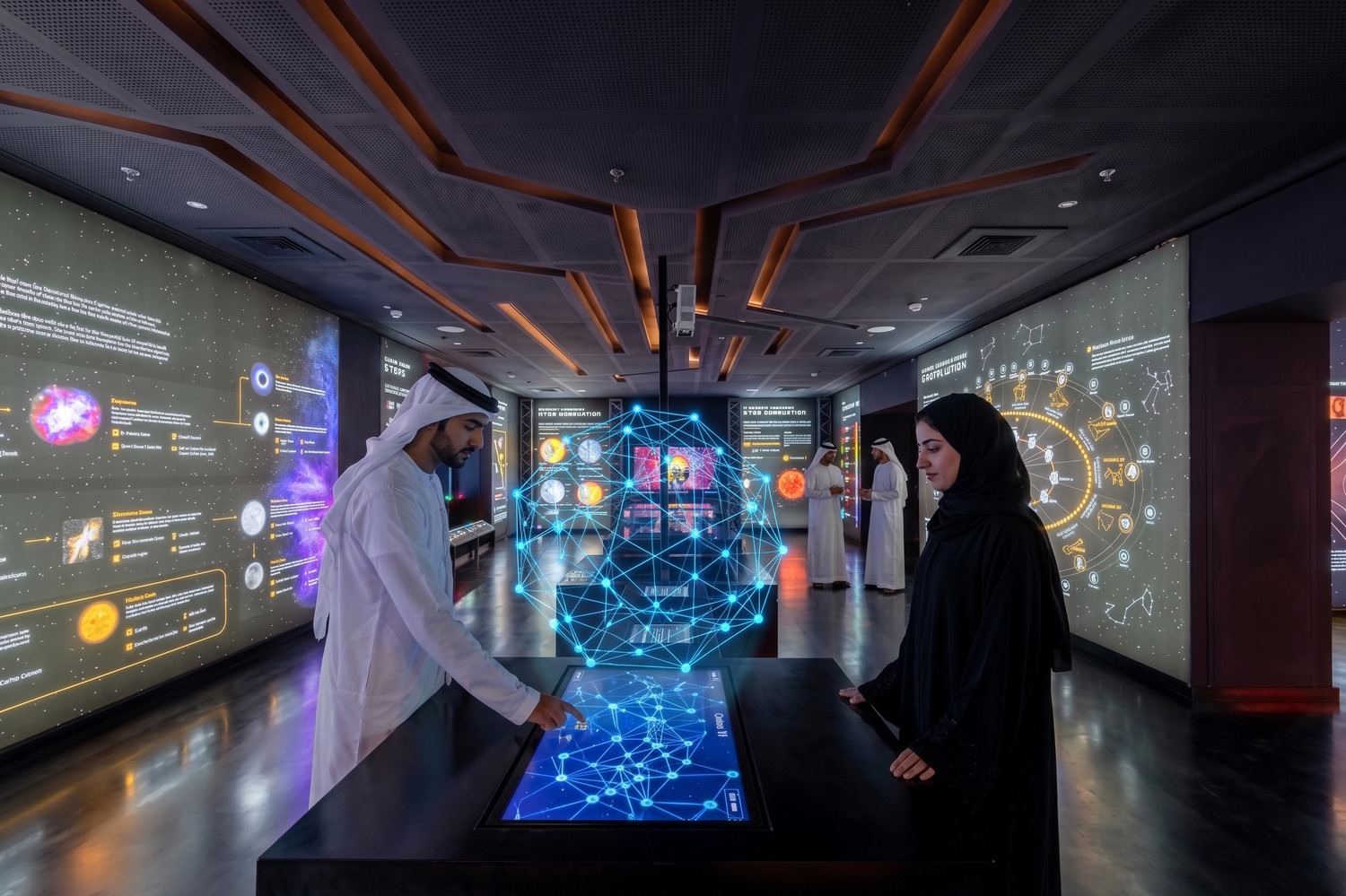
Dubai's Museum of the Future is a strong regional case study in journey structuring: the building is designed as a vertical sequence of distinct thematic floors, moving visitors deliberately downward through a narrative arc from space exploration to sustainability to wellness rather than allowing free-roam browsing. Each floor functions as a distinct narrative beat with its own sensory and technology layer, exactly matching the framework in Section 3.
teamLab Phenomena Abu Dhabi, which opened in 2025 across 17,000 square metres in partnership with Abu Dhabi's Department of Culture and Tourism, takes a different but equally deliberate approach: 25 large-scale installations built around an "Environmental Phenomena" concept, where sensor-driven, reactive environments respond to visitor presence and movement in real time an example of Step 4's sensory-technology mapping taken to an advanced, fully reactive extreme. teamLab Jeddah applies a related methodology for the Saudi market.
These examples matter for regional clients because they demonstrate that the highest-performing visitor experiences in the GCC aren't simply importing generic international exhibition formats they're purpose-built journeys designed around specific narrative goals, then matched to the right technology layer.
Journey design for UAE, Saudi Arabia, Qatar, and Oman audiences carries region-specific requirements that a generic international framework often misses:
Visitor journey design and delivery costs vary widely by scope, but the main cost levers are consistent across projects:
Clients evaluating a project should request a phased proposal that separates journey design/mapping fees from AV integration and technology delivery costs, so each investment can be evaluated on its own merits before committing to full delivery.
AI-personalized journeys are moving from pilot to mainstream: sensor and RFID-linked systems that adapt content, pacing, or language in real time based on visitor profile or behavior. Data-driven flow optimization using engagement analytics gathered post-launch (Step 8 of the framework) to continuously refine zone pacing and content is becoming a standard operating practice for major attractions rather than a one-time launch exercise. And accessibility-first journey design, ensuring the mapped experience works for visitors with mobility, sensory, or cognitive differences from the first design workshop rather than as a retrofit, is increasingly a baseline expectation for flagship GCC cultural and giga-project attractions.


Exhibition design typically focuses on the content and physical layout of individual displays or galleries. Visitor journey design is the broader discipline that sequences those exhibitions (and everything around them arrival, transitions, departure) into one coherent emotional and narrative arc across the entire visit.
Both are possible. A systems audit and journey mapping exercise on an existing space will typically identify a small number of high-impact fixes often at transition points or underused zones, that can be implemented without a full rebuild, alongside a longer-term roadmap for deeper changes.
As early as possible ideally at Step 1, alongside the narrative and spatial design team. Bringing in the technology partner only after the journey is fully designed (Step 4 or later) risks locking in narrative beats that are technically unfeasible or unnecessarily expensive to deliver.
Capacity-tested prototyping (Step 6) is essential here, journeys need to be walked and timed under peak group-flow conditions, not just single-visitor conditions, with queuing, group-size pacing, and alternate flow paths designed in from the start rather than patched on after opening.
Show control systems and protocols including DMX-512, Art-Net, sACN, OSC, and timecode synchronization are the technical backbone that fires media, lighting, audio, and interactive elements in sync as a visitor moves through the mapped journey.
Through engagement analytics instrumented into the technology layer during Step 4/7 of the delivery process, zone-level dwell time, interaction rates on touch and sensor-driven stations, and flow/queue data, reviewed against the success metrics defined in Step 1, then used to guide content and pacing refinements in the months after opening.

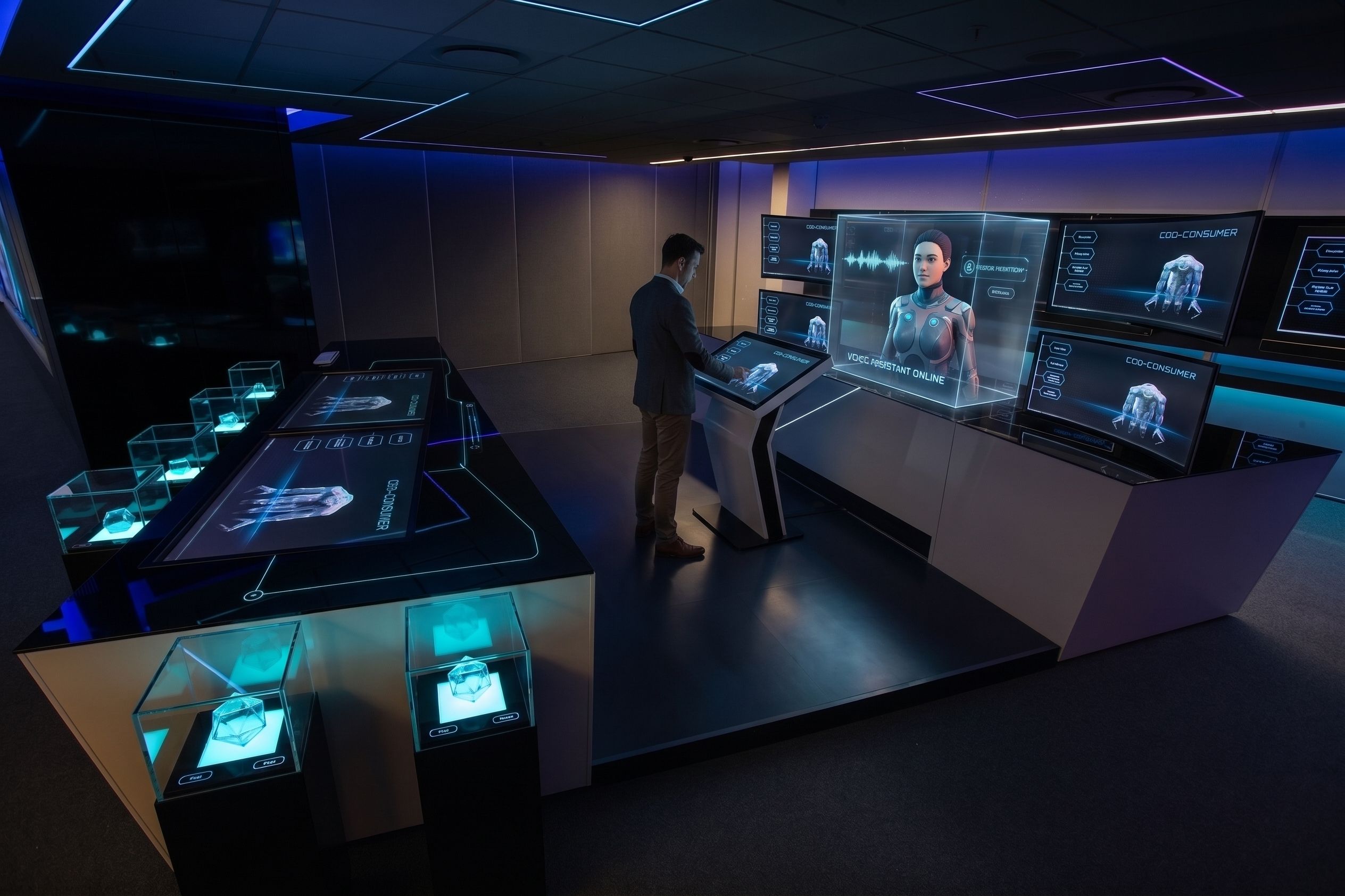
We design and build immersive experiences that engage, excite and transform audience interaction combining art, engineering, and next-gen technology to bring brands and spaces to life.