Services

Tech Concepts
Events & Experiences
Enterprise & Training
Gaming & Education


A permanent interactive installation can use the same LED, projection, sensors and software as a temporary brand activation. But one has to win attention for four days, and the other has to stay useful for five or ten years. Here is what changes, and why the success of a permanent installation is by design.

Both might involve LED, projection, immersive content, sensors, media servers, interactive software, show control, spatial audio or AI. A temporary installation might need to perform for four days. A permanent installation may need to work every day for the next five or ten years. One benefits from the urgency of an event. The other has to remain useful after the excitement of opening has disappeared. One may have technical specialists standing nearby throughout its operating period. The other needs to become something the client can live with, operate and maintain long after the project team has left.
After delivering more than 800 projects across experiential technology, Professional AV, immersive experiences, interactive software and content, this is one of the clearest lessons we have learned at Power Interactive: the success of a permanent installation is by design. It is usually determined long before the equipment arrives on site, by the decisions made around the audience, AV architecture, software, content, operation and maintenance.
QUICK ANSWER: A temporary installation succeeds by winning attention in the first few seconds, using novelty, movement, participation and surprise while the event creates momentum. A permanent installation has no countdown, so its challenge is the opposite: creating something that still has a reason to exist after the novelty has gone.
Temporary experiences have a psychological advantage. They disappear.
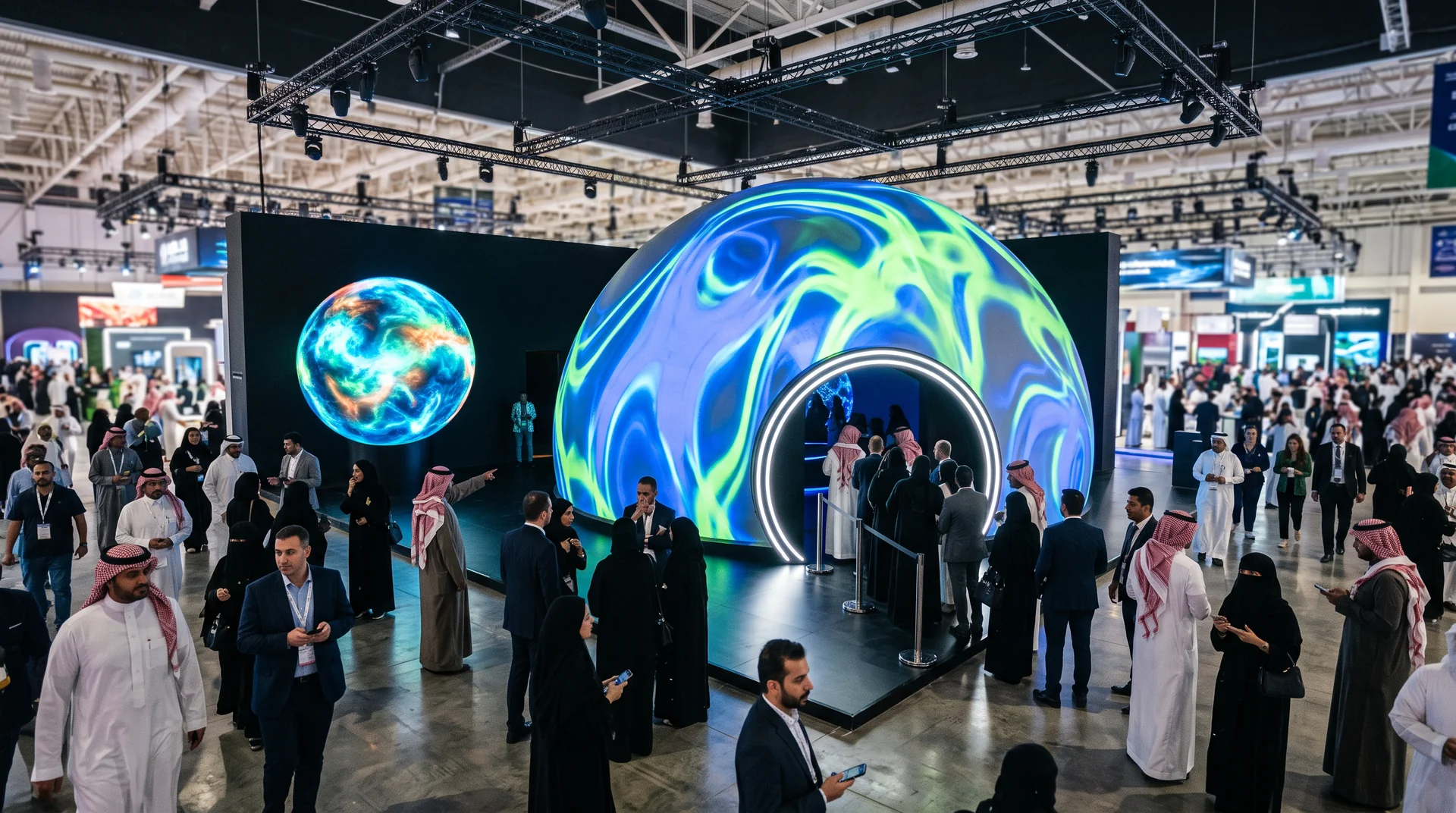
Walk through a major exhibition in Dubai, Abu Dhabi or Riyadh and you can see how quickly that changes behaviour. Visitors are surrounded by competing brands, displays and experiences. Someone enters a dome. A large object begins moving. An interactive wall reacts to a person standing in front of it. A crowd forms around a game. You may not understand what is happening yet, but curiosity has already made you slow down.
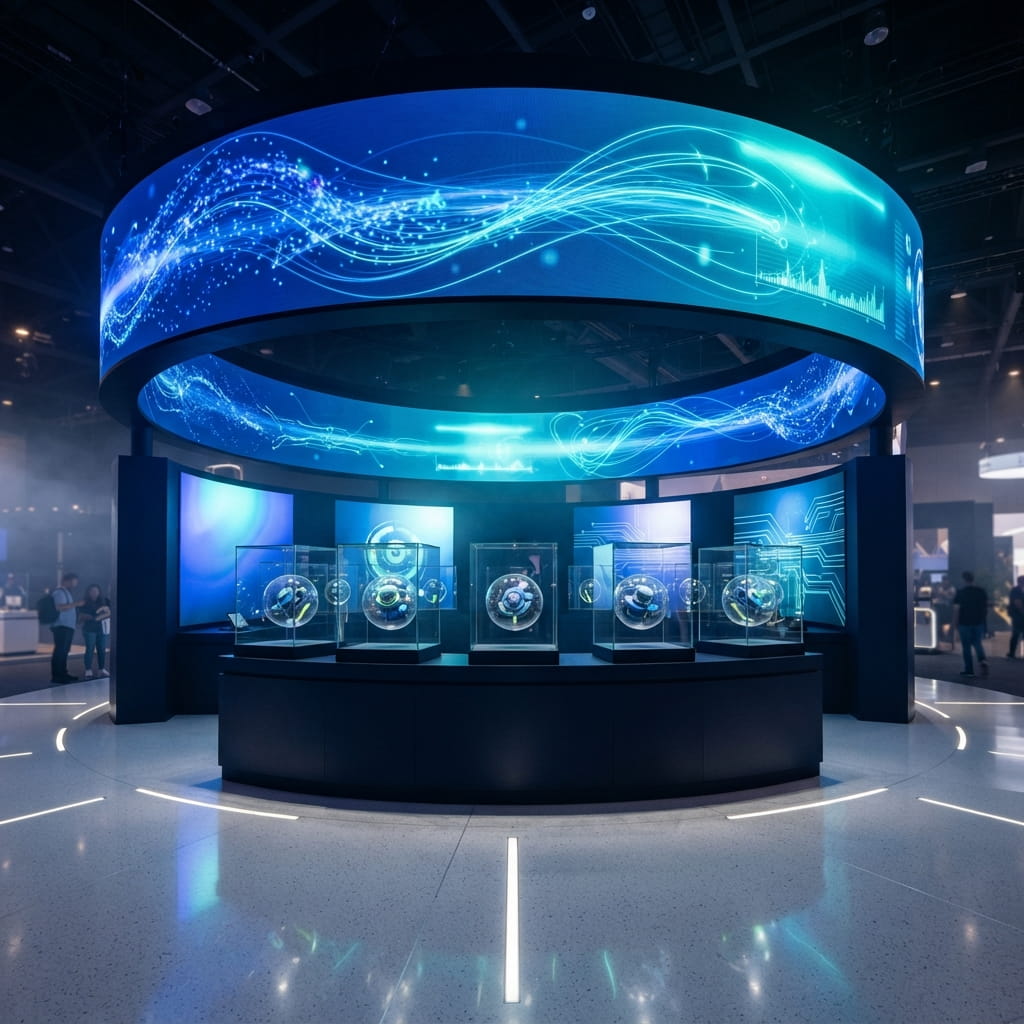
At LEAP 2025 in Riyadh, Power Interactive delivered multiple experiences across TAWAL, NTDP and Mobily, including a 6-metre Super Reality Dome, a spherical display with an interactive Unity application, and an immersive display paired with haptic feedback.
In an environment like LEAP, the experience cannot rely on someone spending several minutes figuring out what to do. There are too many competing distractions. The first few seconds matter. The design needs to make people curious, communicate quickly and make the next action feel obvious. That is where temporary exhibition technology can use novelty, movement, participation and surprise particularly well. The event itself creates momentum.
A permanent installation faces almost the opposite challenge. There is no countdown. The installation will still be there tomorrow. An employee may walk past it every morning. A client may return six months later. The operating team may use the same environment hundreds of times.
Something can be impressive during opening week and almost invisible a year later. The real challenge of permanent experience design is therefore not creating impact on day one. It is creating something that still has a reason to exist after the novelty has gone.
QUICK ANSWER: The most successful permanent installations are platforms rather than single experiences. Content and journeys can change for each audience while the physical infrastructure stays the same, and the client's own team can operate it without a developer or AV engineer on site.
Consider a corporate experience centre. A government delegation visits in the morning. An international client arrives in the afternoon. The following day, the same space hosts an internal strategy session. If that environment can only tell one story, its usefulness is immediately limited.
Our work at the PwC Immersive Experience Center in Riyadh is a good example of thinking differently. The environment is used by government delegations, executive teams, clients and partner organisations. The audience is constantly changing, so the space could not be designed around one fixed presentation.
Power Interactive developed interactive content for the large-format LED environments, bespoke content for the four-sided LED pillar, dedicated media-server infrastructure and a centralised content management system. More importantly, the PwC team can manage and prepare the environment themselves. One audience can experience one story today. Another can experience something completely different tomorrow. The physical infrastructure remains the same.
That is where a large part of the return on investment comes from. Instead of investing in one experience, the client has invested in a platform capable of supporting many experiences over its lifetime.
There are really two users.
This highlights something that is often overlooked in permanent interactive installations. The visitor is the obvious user. We think carefully about what they see, how they interact, how quickly they understand what to do and what they should take away from the experience.
But the operator matters too. A receptionist may need to change a welcome message. A marketing team may need to load new content. A facilitator may need to prepare an experience for a different audience. A museum team may need to update information. They should not need a software developer or AV engineer standing beside them every time something changes.
The technology underneath can be highly sophisticated. The experience of operating it should feel simple.
QUICK ANSWER: For a temporary event, AV equipment arrives, operates for a few days and leaves. In a permanent installation, the network, audio, video distribution, processing, control, media servers and lighting become part of the building, so they must be designed for serviceability, cooling, fault-finding and future expansion, not just for opening day.
The same shift happens with Professional AV. For a temporary event, equipment can arrive, be installed, tested, operate for several days and then disappear. In a permanent environment, AV becomes part of the building. The network, audio, video distribution, processing, control systems, media servers, lighting systems and interactive technology all need to work together repeatedly over a much longer period.
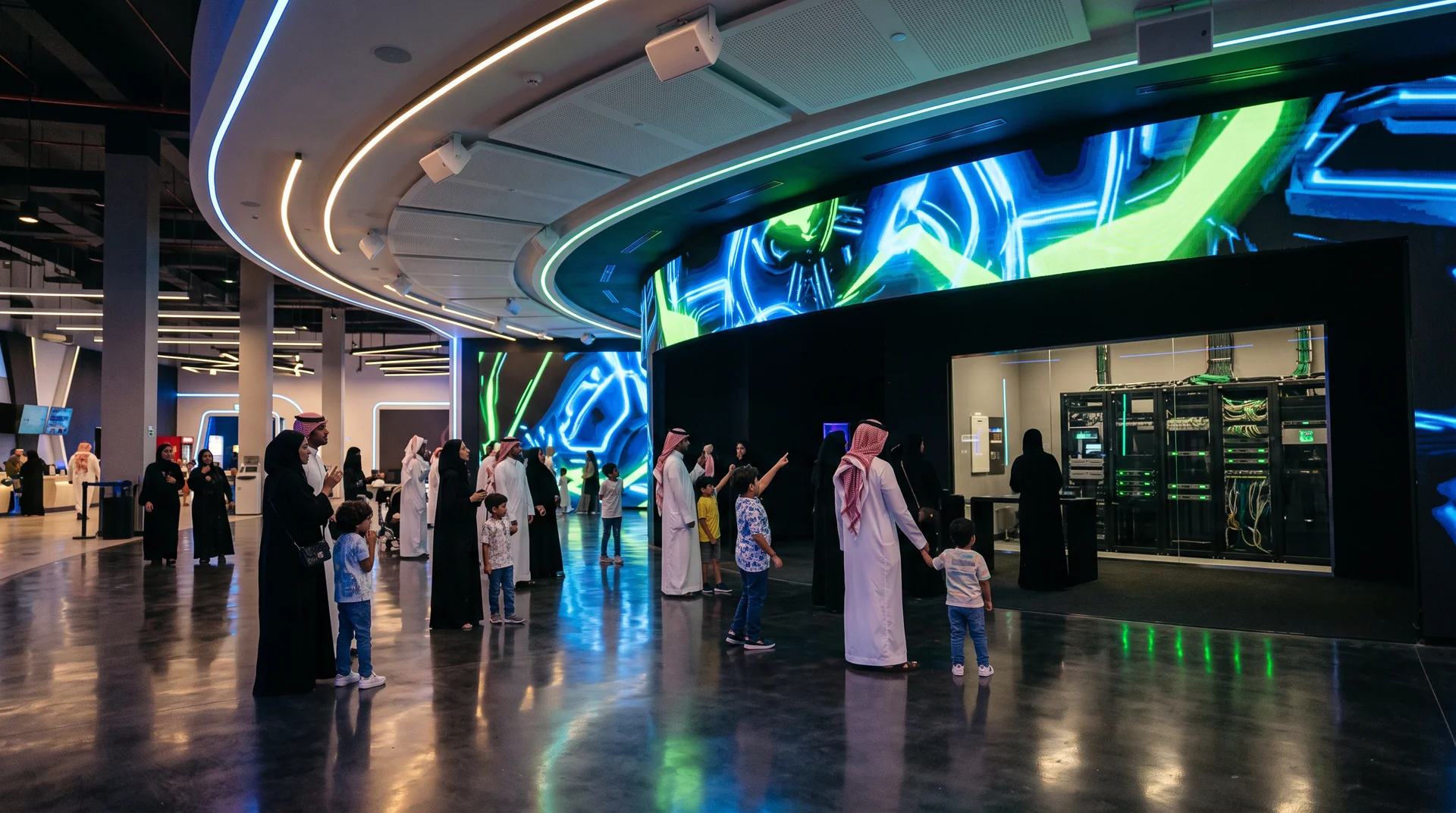
That changes the engineering conversation. Our work on the SEVEN Transformers FEC in Saudi Arabia is a good example. In a permanent entertainment destination, the technical systems cannot be treated like event production equipment that simply stays installed. They become infrastructure.
The guest should never think about the network architecture, processing, equipment racks, signal distribution or control systems supporting the attraction. They should simply experience it. But underneath that experience are hundreds of decisions that directly affect long-term reliability:
None of these questions looks particularly exciting in a concept presentation. Several years later, they can matter more than the display everyone originally wanted to discuss.
That is why choosing a Professional AV integrator in the UAE or Saudi Arabia for a permanent environment should involve much more than equipment selection. The real question is whether the complete system has been designed for the way it will actually be operated. Our Pro AV solutions are engineered on that basis.
QUICK ANSWER: Technology ages, components fail and replacement models change. A permanent installation should be designed for maintenance from the start: reachable equipment, software that does not depend on one device, remote monitoring and an AMC. Even the best AMC cannot fully compensate for a system that was hard to maintain from the beginning.
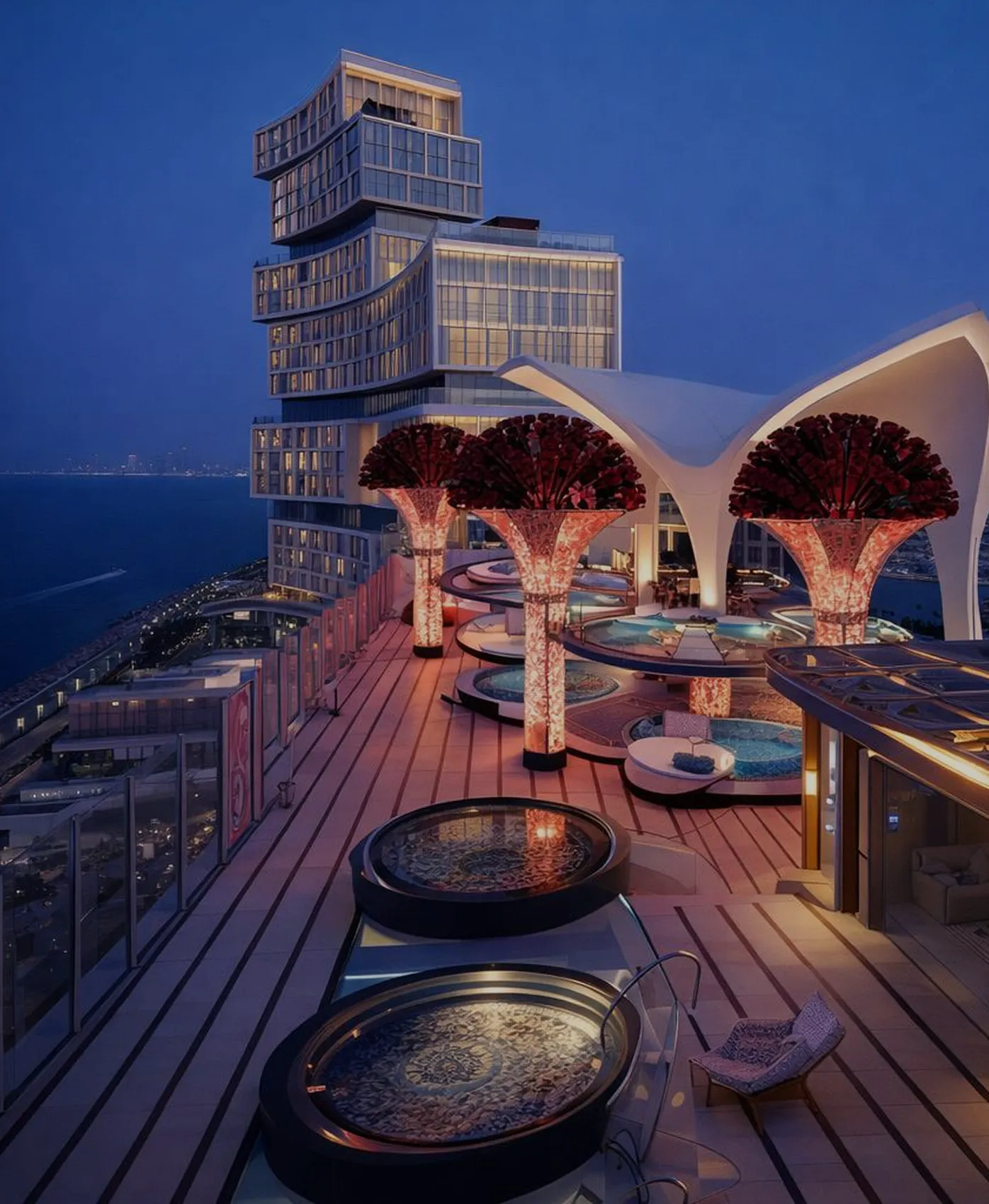
The quality of a permanent installation becomes clearer with time. Our work at Atlantis The Royal in Dubai demonstrates this from another perspective. Power Interactive delivered bespoke lighting installations for the Level 22 Lounge, supported by custom software, server infrastructure, control systems and operator interfaces. Guests experience the visual result. Behind it sits the technical system that has to continue delivering that result.
This is where permanent environments introduce realities that short-term projects rarely face in the same way. Technology ages. Components fail. Connectors deteriorate. Hardware reaches end of life. Software needs attention. Replacement models change. The important question is whether the system was designed with those realities in mind.
Imagine a projector that is perfectly specified and beautifully integrated into the architecture but cannot be serviced without removing part of the ceiling. The maintenance problem existed before the projector ever failed.
The same is true of software. If an interactive application depends entirely on one specific piece of hardware and that device is discontinued, replacing a relatively small component can suddenly require redevelopment of part of the experience.
This is why maintenance should start during design. Annual Maintenance Contracts (AMC), preventative servicing, remote monitoring and ongoing technical support all play an important role in protecting permanent AV and interactive installations. But even the best AMC cannot fully compensate for an environment that was difficult to maintain from the beginning.
A good support strategy keeps a system working. Good design makes that system easier to support. We cover the engineering detail, from duty cycles to AMC scope, in Permanent Installation vs Event Activation.
QUICK ANSWER: A permanent installation stays relevant either because its digital content changes continually or because the installation itself evolves. The useful design question is not only how to impress on opening day, but what will make the experience worth interacting with three years from now.
Longevity also creates an interesting design opportunity. Sometimes a permanent experience stays relevant because its digital content changes continually. Sometimes the installation itself can evolve.
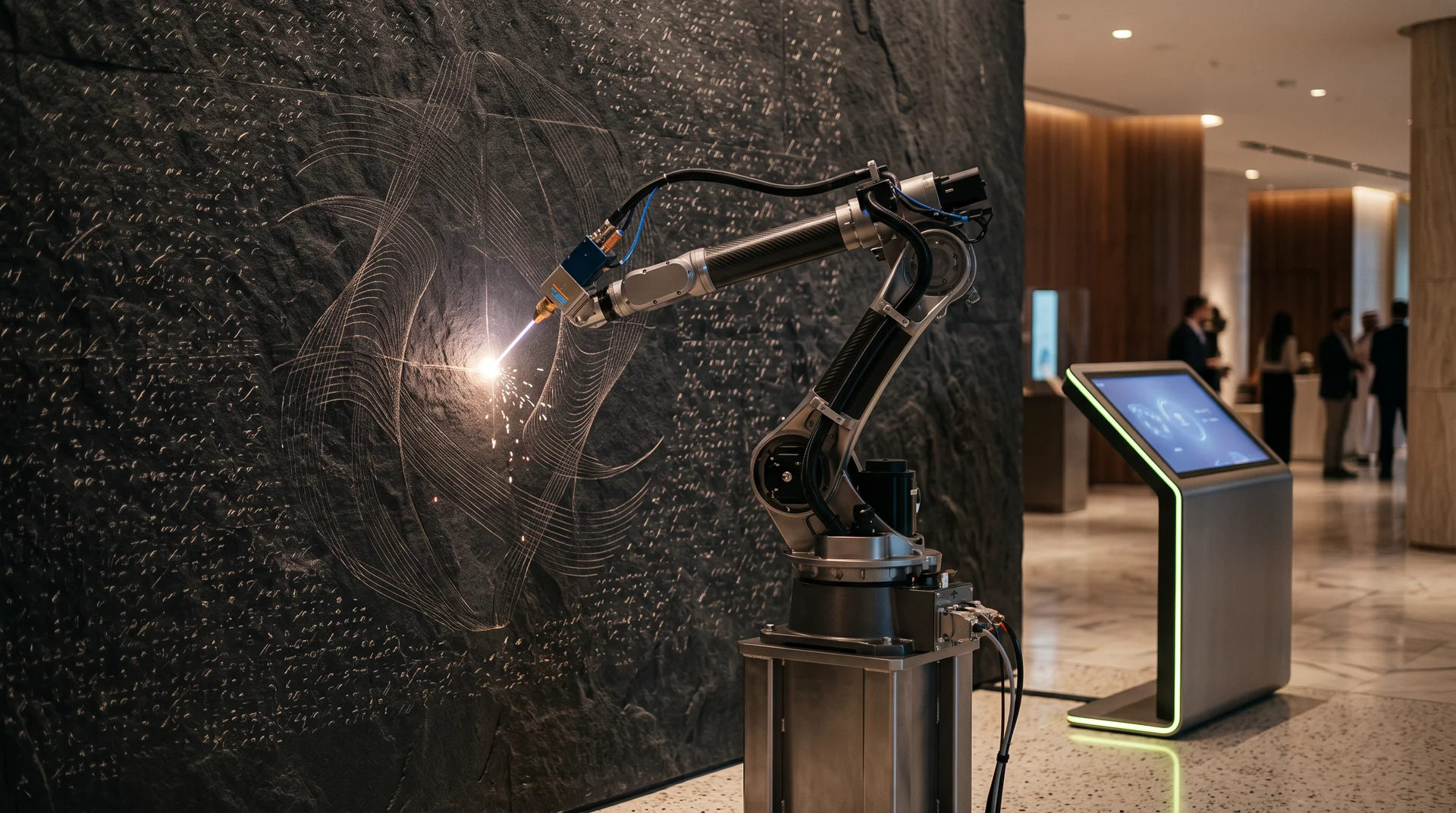
The Robotic Donor Recognition Wall at Al Jalila Foundation in Dubai is a good example. A donor interacts through a digital interface, after which a precision robotic laser-engraving arm physically inscribes their name onto the installation.
Each interaction changes the wall. The person visiting next month does not encounter exactly the same experience as the person visiting today. Over time, the installation carries a record of everyone who has participated before. Time becomes part of the experience.
That raises a more useful question when designing permanent experiential technology. Instead of asking only, “How do we make this impressive when it opens?”, we should also ask, “What will make this worth interacting with three years from now?”
Sometimes the answer is new content. Sometimes it is new functionality. Sometimes the experience itself grows.
QUICK ANSWER: Temporary does not mean superficial. The strongest short-term activations concentrate attention around one message and make an idea understandable within minutes. Their support model, with specialists on site for the event period, is right for an exhibition but would signal a design problem in a permanent space.
Some of the strongest short-term experiences are effective precisely because they concentrate attention around one message.
At the World Government Summit, Power Interactive created an immersive experience for the UAE Ministry of Climate Change and Environment focused on mangrove ecosystems. Visitors entered an immersive dome and made environmental decisions through an interactive touchscreen. Those choices changed the story unfolding around them.
The experience took something that could easily have become another presentation about environmental responsibility and turned it into a decision the visitor could participate in. The installation did not need to operate for ten years. It needed to make an idea understandable within a few minutes. That is where temporary immersive technology can be particularly effective.
We saw something similar from a different perspective at Accessibility Expo 2025 in Dubai, where Power Interactive worked on an immersive mental-health experience and an interactive sign-language avatar application. The objective in both cases was understanding. Visitors were able to interact with information rather than simply read it.
The support model was also appropriate for a temporary exhibition. Technical specialists were available during the event period to make sure the installations performed reliably while the audience was there. For a five-day exhibition, that makes sense. For a permanent experience centre that needs to operate every day for the next five years, requiring the same level of daily specialist intervention would indicate a very different problem.
The technologies might overlap. The operating model should not.
QUICK ANSWER: Event software can be frozen for a short, controlled window. Permanent software lives in a changing world of operating-system updates, cybersecurity requirements, new APIs, replaced hardware and new features such as AI, so it must be database-driven and able to evolve. Permanent spaces also need a content strategy, not only launch content.
Software is one of the areas where the difference between temporary and permanent installations becomes especially clear. For an event, the technical environment can often be frozen. Updates can be disabled. The hardware is known. The network is controlled. The application only needs to remain stable during a defined period.
Permanent interactive software lives in a changing world. Operating systems evolve. Cybersecurity requirements change. APIs get updated. Hardware is replaced. New stakeholders arrive. Clients want new features. An organisation may even decide three years later that it wants AI integrated into an experience that was designed before that requirement existed. Permanent software therefore needs room to evolve.
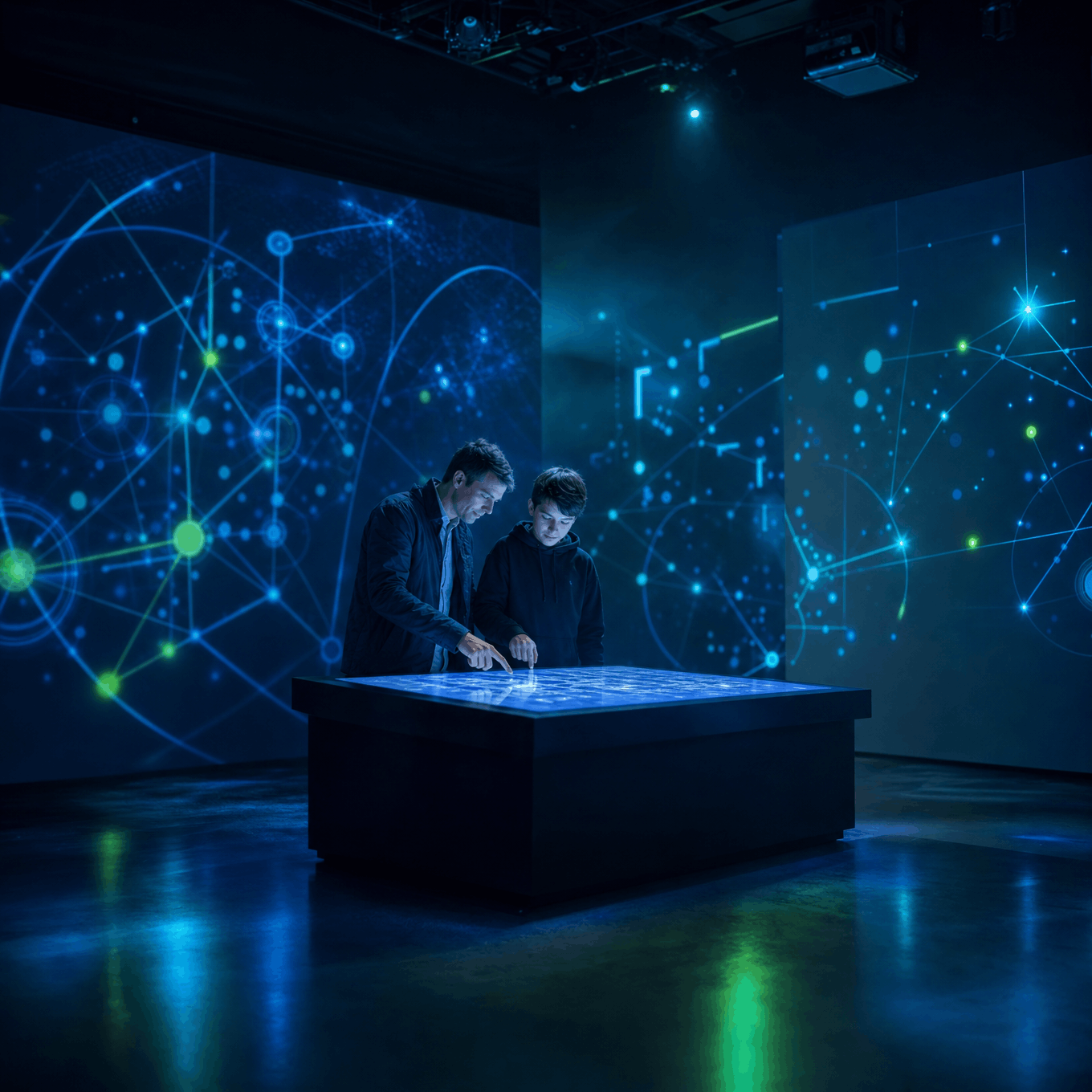
Imagine an interactive product table launched with ten products. Three years later, there are thirty. If every product and every piece of information was hard-coded into the original application, adding twenty products becomes another development exercise. If the system was built around a flexible database or content management system, the client may be able to make those changes internally. The visitor sees an interactive table either way. The ownership experience is completely different.
Content has the same issue. A beautifully produced immersive film may be perfect for an exhibition because most visitors will see it once. Play the same film every day inside a permanent experience centre for four years and eventually it becomes part of the background. Permanent installations need a content strategy, rather than only launch content. Our content and app development team builds both.
This is particularly important for experience centres in Saudi Arabia and the UAE, where one physical environment may need to support executive presentations, government delegations, workshops, real-time data, interactive storytelling and events throughout its lifetime. The hardware investment remains largely the same. The value increases when that infrastructure can support more.
QUICK ANSWER: No technology is future-proof, because displays, processing, AI and software platforms will keep evolving. A future-proof permanent installation is one designed so change remains possible: components can be replaced, AI and new screens can be added, and no single device can make the whole experience obsolete.
Clients often ask how a permanent AV or interactive installation can be future-proofed. The answer is not to buy technology that will never become outdated. That technology does not exist. Displays will improve. Processing will become more powerful. AI will change the way people interact with physical environments. Software platforms will evolve. Trying to predict exactly what will happen is unrealistic.
A more practical definition of future-proofing is designing the system so change remains possible. Four questions reveal whether that has happened:
Good permanent system design does not stop technology from ageing. It prevents one ageing component from making everything around it obsolete. For a full framework, see how to build an experience centre that does not become outdated in two years.
QUICK ANSWER: Temporary activations are measured during the event: participation, dwell time, qualified leads, conversations, social sharing and brand recall. Permanent installations should be measured over their lifetime: uptime, operational independence, content reuse, support and maintenance needs, upgrade cost and how many purposes the space can serve.
This is ultimately why permanent and temporary projects should be measured differently.
| Temporary activation | Permanent installation | |
|---|---|---|
| When value is created | During the event window | Over five to ten years of operation |
| Typical success measures | Participation, dwell time, qualified leads, conversations, social sharing, brand recall | Uptime, operational independence, content reuse, number of audiences and purposes served |
| Cost lens | Cost per event and per engagement | Total cost of ownership, including support, maintenance and upgrades |
| Hidden cost to watch | Over-engineering for a short run | Specialist call-outs every time content needs to change |
Imagine two experience-centre proposals. The first costs slightly less but requires specialist support every time content needs to change. The second costs more initially but allows the client’s own team to operate the environment and manage much of the content themselves. After five years, which one was actually cheaper?
The same applies to hardware, software and maintenance. Initial capital cost matters, but it is only one part of the equation. Sometimes spending more time thinking at the beginning saves significantly more money later. We explore measurement in more depth in The Experience Is the ROI.
QUICK ANSWER: Permanent and temporary installations can share the same LED, projection, sensors, media servers and software. What differs is lifespan, audience behaviour, engineering, software approach, content strategy, operating model, support and how success is measured.
| Factor | Temporary installation | Permanent installation |
|---|---|---|
| Lifespan | Days to weeks | Five to ten years or more |
| Audience behaviour | First-time visitors, high competition for attention | Returning visitors, staff and repeat clients |
| Design goal | Win attention in the first few seconds | Stay relevant after the novelty has gone |
| Who operates it | Technical specialists on site | The client's own team |
| Professional AV | Production equipment, installed and struck | Building infrastructure |
| Software | Frozen for a defined period | Database-driven, able to evolve |
| Content | Launch content seen once | A content strategy with planned refreshes |
| Maintenance | Fix on site during the event | Designed in, with AMC and remote monitoring |
| Future-proofing | Not required | Designed so change remains possible |
| ROI | Measured during the event | Measured over the life of the experience |
QUICK ANSWER: A successful permanent interactive installation, immersive experience or Professional AV system begins by thinking beyond opening day: long-term AV reliability, software that can evolve, content that stays relevant, simple client operation, maintainable equipment and an architecture that accepts some technology will change.
Across more than 800 projects, Power Interactive has worked in both worlds. We have delivered temporary exhibitions and activations where everything has to perform perfectly during a concentrated window, and permanent installations where the real test begins after handover. The technologies often overlap. The mindset should not.
A successful permanent installation requires AV infrastructure designed around long-term reliability, software capable of evolving, content that can remain relevant, systems that clients can operate without unnecessary complexity, equipment that can be maintained, and an architecture that accepts that some technology will eventually need to change.
If you are planning a permanent interactive installation, immersive experience, experience centre or Professional AV system in Dubai, the UAE, Saudi Arabia or elsewhere in the GCC, these are conversations worth having before the technology is specified. Talk to our team about your project.
Because opening day is when a permanent experience finally starts proving whether the design decisions were right.
More than 800 delivered projects since 2018 across the UAE, Saudi Arabia, Oman and the wider GCC, for clients including Atlantis The Royal, Al Jalila Foundation, VISA, PwC, Emaar, DEWA, the Government of Dubai and Dubai Desert Conservation Reserve.
Author Mohamed Sorkatti is Director of Operations at Power Interactive, a Dubai-based immersive technology studio. This article draws on more than 800 experiential technology projects designed, engineered and delivered by Power Interactive across the UAE, Saudi Arabia, Oman and the wider GCC since 2018.


A temporary installation, such as an exhibition or brand activation, runs for days or weeks with technical specialists usually on site. A permanent installation may run every day for five to ten years, operated by the client's own team. The technology can be the same, but the engineering, software, content strategy, maintenance and operating model are completely different.
Yes. Both can use LED, projection, immersive content, sensors, media servers, interactive software, show control, spatial audio or AI. What changes is how that technology is specified, integrated, serviced and supported, because a permanent system has to operate reliably for years without specialists standing beside it.
Permanent installations need infrastructure-grade AV, service access, cooling, monitoring, flexible software, a content management system, documentation and training. These add initial cost but reduce the total cost of ownership, because the client's team can operate and update the space without paying for specialist support every time something changes.
Event activations are measured during the event through participation, dwell time, qualified leads, conversations, social sharing and brand recall. Permanent installations should be measured over their lifetime, including uptime, operational independence, content reuse, maintenance needs, future upgrades and how many different audiences and purposes the space serves.
Ideally, the client's own team. A receptionist, marketing team, facilitator or museum team should be able to change messages, load content and prepare the space for different audiences through simple controls, without a software developer or AV engineer on site. Ongoing technical support is then provided through an AMC and remote monitoring.
A temporary installation is the right choice when the goal is to communicate one clear message to a large audience in a short window, such as an exhibition, summit or product launch. It can use novelty, movement and participation to win attention quickly, and it does not need to be engineered for years of unattended operation.
You design the system so change remains possible. Media servers and sensors should be replaceable without rebuilding the experience, the software architecture should be able to accept AI and new features, and the network and processing should have spare capacity for more screens. No technology is future-proof on its own.
Ask where equipment will be installed and whether it can be serviced, how cooling is handled, whether a failed component can be replaced without affecting the rest of the system, how faults are detected, what capacity exists for expansion, who will operate the system, and what the AMC covers.

Power Interactive is a Dubai-based experiential technology company, building immersive experiences, interactive installations and Pro AV systems for clients across the UAE, Saudi Arabia and the GCC.