Services

Events & Experiences
Enterprise & Training
Gaming & Education


What experiential technology is, the main types, costs, and how to choose it for events in Dubai & the GCC. The complete 2026 guide from Power.

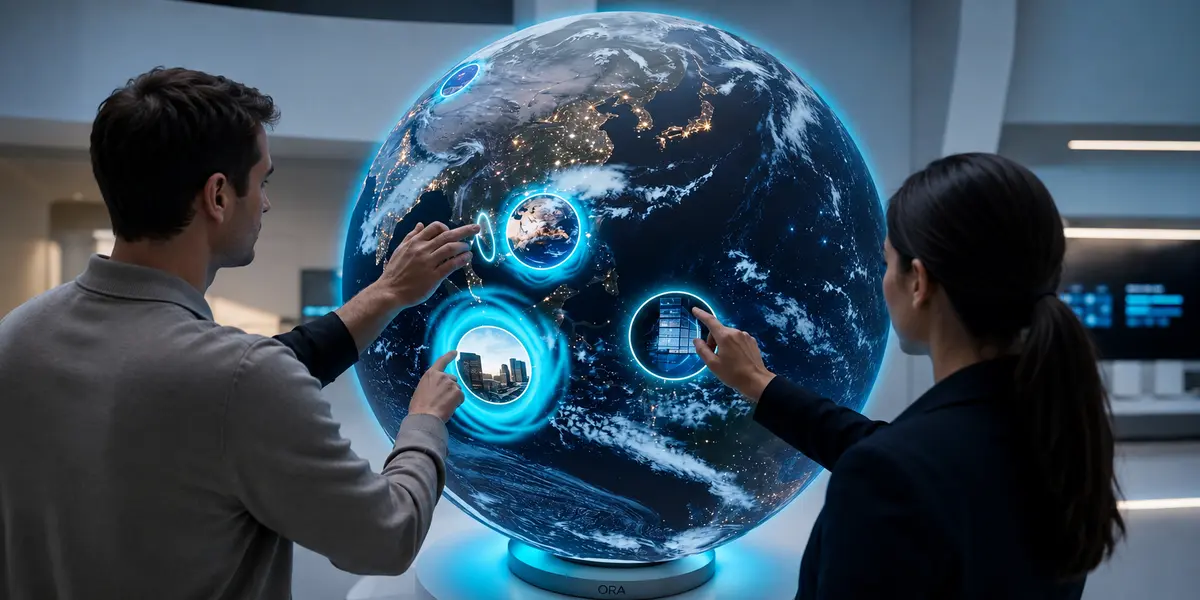
That shift has a name: experiential technology. It's the umbrella term for interactive, immersive systems, interactive projection walls, transparent OLED screens, holograms, LED floors, touch tables, and AR/VR, that turn a passive display into a two-way experience. Used well, it doesn't just decorate a stand or a lobby; it becomes the reason people stop, stay longer, remember your brand, and share it.
This guide is the complete, practical reference: what experiential technology actually is, how it differs from ordinary AV, the main types and exactly what each is best for, the 2026 trends shaping the field, how to choose the right system for your specific event, what it costs, and how a project comes together from concept to on-site support. Whether you're planning a one-off product launch or a permanent showroom centrepiece, by the end you'll know precisely what to ask for, and why.
Quick answer
Experiential technology is interactive, immersive technology, such as interactive projection walls, transparent OLED screens, holograms, and AR/VR, that turns a passive display into something an audience can touch, move, and play with. At events it creates memorable, shareable moments that hold attention far longer than standard screens or signage.
In depth. Experiential technology is best understood not as a single product but as a category defined by one principle: the content responds. A traditional display is a one-way channel, it plays, the audience watches, and nothing the viewer does changes what happens on screen. Experiential technology closes that loop. It senses the audience, through touch, gesture, motion, proximity, or the position of a physical object, and changes its output in real time as a result. The viewer stops being a spectator and becomes a participant.
That responsiveness is created by combining three layers that always work together:
Because the content is generated and triggered live, every experience is bespoke. The same hardware can run a branded game one week and a data visualisation the next. This is the crucial mental shift for buyers: you are not purchasing a fixed "thing," you are commissioning a capability that can be themed, branded, and re-programmed around each campaign.
It's also worth separating experiential technology from two terms it's often confused with. Digital signage is one-way display of scheduled content, informative, but passive. Audio-visual (AV) is the broad infrastructure of screens, projectors, and sound. Experiential technology uses AV components, but its defining feature is interactivity and immersion: the audience materially shapes the experience. That distinction is exactly what makes it so effective for engagement-led goals, and what justifies its place at the centre of a stand, launch, or showroom rather than off to the side.
Quick answer
Standard AV and digital signage display content at an audience. Experiential technology responds to the audience in real time, through touch, gesture, motion, or position, turning viewers into participants. That interaction is what drives dramatically higher dwell time, brand recall, and social sharing at events.
In depth. At an event, attention is the scarcest resource in the room. People walk fast, glance at dozens of stands, and forget almost all of them. The job of any installation is therefore to do three things in sequence: stop someone, hold them, and make them remember. Experiential technology is engineered for exactly that sequence in a way that passive media simply is not.
It stops people because movement and responsiveness trigger an instinctive reaction, we're wired to notice things that react to us. A wall that ripples when someone walks past, or a screen that slides to reveal a real product, creates a "wait, how did that work?" beat that pulls people in from the aisle.
It holds them because interaction creates a small loop of curiosity and reward: I touched it, something happened, I want to try again. That loop is what pushes dwell time from the few seconds a passive screen earns to the minutes that an interactive experience can command. Longer dwell time is not a vanity metric, it is more time for your message to land, more time for a conversation with a sales rep, and more time for the experience to become memorable.
And it makes them remember for two reasons. First, active participation encodes memory far more strongly than passive viewing, doing beats watching. Second, experiential moments are inherently filmable. When someone interacts with a striking installation, they reach for their phone, capture it, and post it. That turns each visitor into a distribution channel, extending the reach of a physical event far beyond the people in the room. For regional brands, experiential storytelling is widely reported to outperform conventional formats on engagement by a wide margin, and the share-ability is a large part of why.
There is also a measurement advantage that matters increasingly to marketers. Because experiential systems are sensor-driven, they can capture interaction data, how many people engaged, for how long, which content performed, peak times. That converts a "wow factor" into reportable ROI: dwell time, engagement counts, and lead capture you can put in a post-event report. In short, the difference isn't aesthetic. Passive media decorates an event; experiential technology performs at it, and proves it did.
Quick answer
The region's enormous events and exhibitions economy, world-class flagship retail, and an explicitly innovation-first, smart-city culture (including Dubai's Metaverse and AI strategies) make the UAE and GCC one of the most active markets on earth for immersive, interactive event experiences.
In depth. The GCC's appetite for experiential technology isn't a coincidence, it's the product of several forces stacking on top of each other.
A calendar built on world-scale events. Dubai and the wider region host a relentless schedule of major exhibitions, summits, and launches, GITEX, the Dubai World Trade Centre programme, fashion and luxury weeks, automotive reveals, and a constant flow of corporate activations. In an environment where dozens of well-funded brands compete for the same visitors, a static stand is invisible. Experiential installations have become the default way to win the floor, which means the bar for "impressive" keeps rising and the supply of capable technology keeps deepening.
Flagship retail and hospitality that treat experience as the product. The region's malls, hotels, and showrooms are not commodity spaces, they are destinations designed to impress. Luxury brands use transparent OLED reveals to launch watches and jewellery; developers use immersive rooms to sell off-plan properties; hospitality groups install centrepieces that signal prestige the moment a guest walks in. When experience is the brand, interactive technology is a natural investment rather than a novelty.
An explicit, top-down innovation mandate. This is the differentiator that sets the GCC apart from most markets. Dubai's Metaverse Strategy, the UAE's national AI agenda, and the broader smart-city programmes don't just permit cutting-edge technology, they actively pull for it. Government entities, semi-government developers, and the brands orbiting them want to be seen as forward-looking, and experiential technology is one of the most visible ways to demonstrate that. The result is a culture where "let's do something nobody has seen before" is a starting brief, not a stretch goal.
Audiences primed to engage and share. The UAE has among the highest smartphone penetration and social-media usage rates in the world, and a young, internationally diverse, experience-hungry population. That's the perfect audience for experiential technology: people who will step up to interact and then immediately broadcast it. For brands, that means the in-room experience reliably converts into out-of-room reach.
Put together, these forces make the region a place where experiential technology isn't a risk to be justified but an expectation to be met, and where the local talent, suppliers, and installation expertise to do it well have matured alongside the demand.
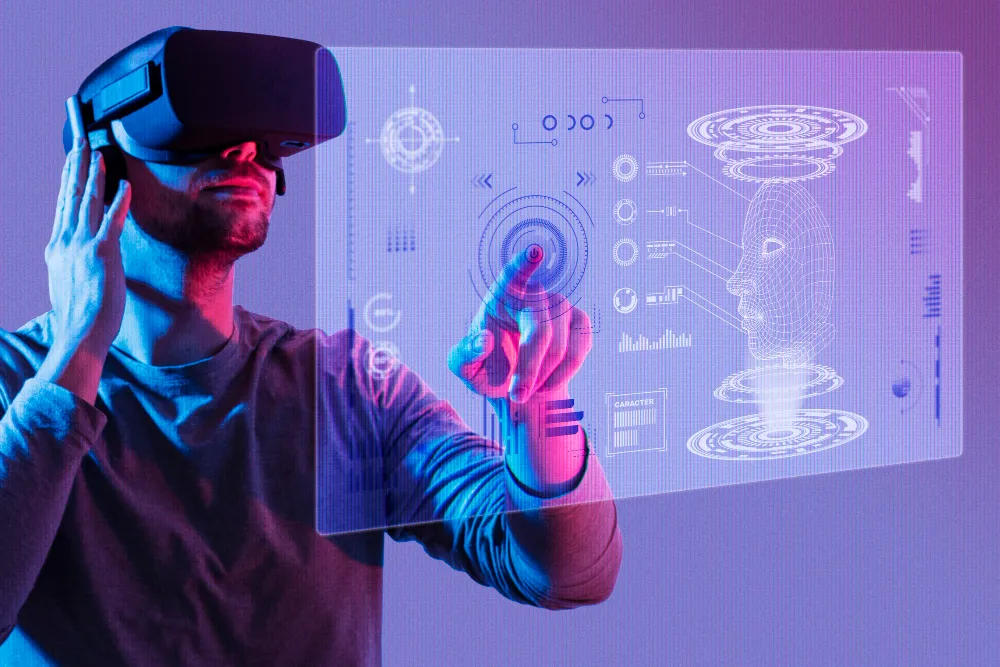
Quick answer
The main types are interactive projection walls, transparent OLED (TOLED) sliding screens, hologram and 3D displays, interactive LED floors and walls, touch tables and kiosks, and AR/VR immersive experiences. The right choice depends on your goal, your space, and how hands-on you want the audience to be.
In depth. Each type solves a different problem. Below is a comparison overview, followed by a deeper explanation of each so you can match the technology to the moment you're trying to create.
Quick answer
Experiential technology works best anywhere you need to stop foot traffic or create a memorable moment, exhibitions and trade shows, product launches and brand activations, luxury retail and showrooms, museums and attractions, corporate lobbies, and galas or private events.
In depth. The technology is flexible, but it pays off most in settings where attention is contested or where a premium impression matters. Here's where each environment benefits and what "best" looks like in practice.
Exhibitions & trade shows. The classic use case. On a crowded floor where every stand competes for the same visitors, an interactive wall or hologram turns passers-by into engaged visitors and gives your sales team a reason for people to stop and stay. The goal here is footfall and qualified conversations; success is measured in dwell time and leads, and the experience often doubles as a magnet that makes a stand feel busy and important.
Product launches & brand activations. When the moment is the product, a transparent OLED reveal or a projection-mapped sequence builds anticipation and delivers a climax people film and share. The point is to create a single, theatrical "hero moment", the unveiling, and to make it share-worthy so the launch travels online long after the event ends.
Luxury retail & showrooms. In premium environments, experiential technology adds storytelling and prestige without cluttering the space. Layered digital narrative over a real watch, car, or handbag elevates perceived value and lets staff tell a richer story. Permanent installs here also signal that the brand is contemporary and confident.
Museums & visitor attractions. Interactivity transforms learning from passive reading into hands-on exploration. Touch tables, interactive walls, and immersive rooms let visitors explore artefacts, timelines, and concepts at their own pace, dramatically increasing engagement and retention, especially with younger audiences.
Corporate lobbies & flagship spaces. A permanent centrepiece in a headquarters or flagship sets the tone for every visitor and employee: this is an innovative organisation. It can also flex its content, welcoming named guests, visualising live company data, or telling the brand story, so the same install stays fresh for years.
Galas, weddings & private events. Here the job is pure spectacle and delight. An interactive LED floor, a reactive wall, or a hologram becomes the talking point of the night, the wow-factor centrepiece guests remember and photograph.
The throughline across all of these: experiential technology earns its place when you need to win attention, deepen engagement, or make a premium statement, and the more contested or important the setting, the bigger the payoff.
Quick answer
In 2026, the biggest shifts in experiential event technology are AI-driven personalization, deeper immersion through Metaverse and 3D, sustainability-conscious modular builds, and a stronger focus on data-driven engagement that proves ROI.
In depth. Four trends are actively reshaping what clients ask for and what the best installations deliver this year.
1. AI-driven personalization. Artificial intelligence is moving from a buzzword to a working layer inside experiential installations. Content can now adapt in real time to who is in front of it, responding to crowd size, dwell behaviour, or demographic cues from anonymised computer vision, so the same wall behaves differently for a quiet morning and a packed afternoon. AI is also accelerating content creation itself, letting teams generate and iterate visuals far faster, and powering interactive "assistants" and avatars that hold a conversation with visitors. The practical takeaway: experiences are becoming less like a fixed loop and more like a system that reads the room.
2. Deeper immersion: Metaverse, 3D, and the physical-digital blend. The line between physical events and digital worlds is blurring. Brands are pairing in-person installations with persistent virtual layers, 3D product launches, ongoing virtual showrooms, and avatar-based interactions that extend the experience beyond the venue and beyond the event day. In the GCC specifically, Dubai's Metaverse ambitions are pulling this forward, so expect more hybrid builds where a physical hologram or wall is the in-room anchor for a larger connected digital experience.
3. Sustainability and modular, reusable builds. As experiential becomes standard, the conversation has matured from "what can we build once" to "what can we reuse." Clients increasingly want modular hardware and re-skinnable content that can be redeployed across multiple events, reducing both cost and waste. Rental and managed-service models support this directly, a sustainable, lower-commitment way to access premium technology without it ending up in storage or landfill after one show.
4. Data-driven engagement and provable ROI. The pressure on marketing budgets has made measurement non-negotiable. Modern installations are expected to capture engagement data, interaction counts, dwell time, heat patterns, peak periods, and lead capture, and feed it into post-event reporting. This is turning experiential from a "brand" line item that's hard to justify into a measurable performance channel, which in turn is expanding budgets for teams that can show the numbers.
The common thread for 2026: experiential technology is getting smarter, more connected, more responsible, and more accountable. The installations that stand out this year aren't just the most spectacular, they're the ones that adapt, integrate, reuse, and report.
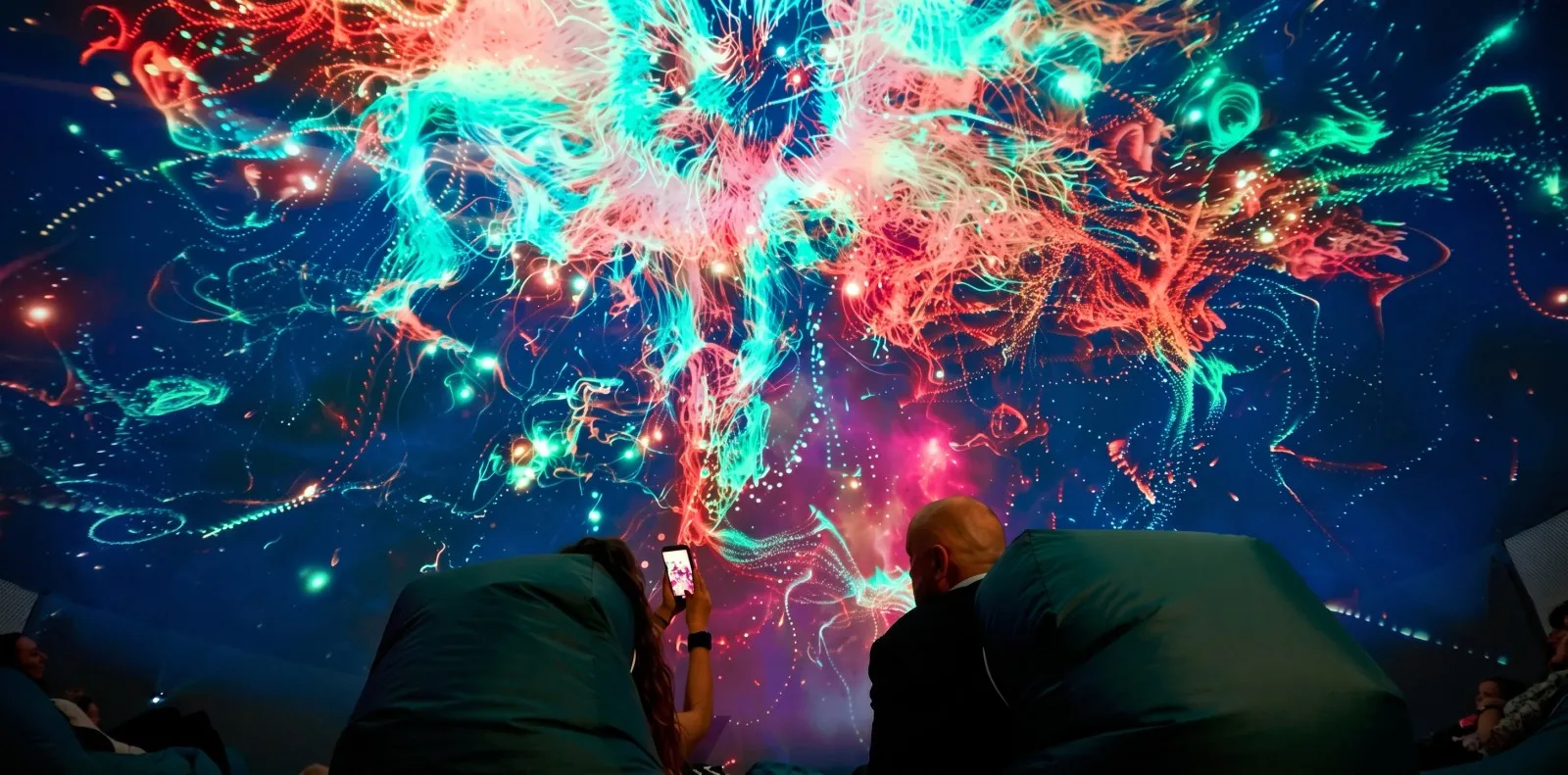
Quick answer
Choose the right experiential technology by working through five questions in order, your goal, your space, your audience, the level of interactivity you want, and whether to rent or buy, then match those answers to a technology type.
In depth. The most common mistake is starting from the technology ("we want a hologram") rather than the objective. Reverse it. Run through these five steps and the right system usually becomes obvious, and you'll brief your supplier far more effectively.
Step 1, Define the goal. Be specific about the single most important outcome. Stop foot traffic and generate leads points toward a large, crowd-pulling interactive projection wall. Launch a product with a wow moment points toward a transparent OLED reveal or projection mapping. Educate or inform at depth points toward touch tables or immersive rooms. Make a prestige statement in a permanent space points toward a hologram or LED centrepiece. If you have several goals, rank them, the primary one drives the choice.
Step 2, Assess the space. Physical reality constrains the field fast. Measure the available footprint and ceiling height, confirm whether it's indoor or outdoor (most high-end interactive systems are indoor), and check power supply, mounting points, and ambient light. Bright daylight, for example, favours LED or OLED over projection. Sharing the venue's specs early prevents falling in love with a system the space can't support.
Step 3, Understand the audience. Consider footfall (a few VIPs or thousands of visitors?), group dynamics (individuals exploring, or crowds gathering?), and how willing they'll be to physically engage. High-footfall public events reward multi-user, low-friction interactions like a projection wall; intimate or premium settings can support slower, deeper, more guided experiences.
Step 4, Decide the level of interactivity. This is a genuine choice, not "more is always better." A trigger-based experience (like a TOLED reveal) is controlled, theatrical, and reliable, perfect for a staged moment with no risk of someone "breaking" it. A fully interactive experience (touch, gesture, motion) is engaging and participatory but needs more content design and crowd management. Match the interactivity to the moment and to how much hands-on engagement you actually want.
Step 5, Rent or buy. Finally, decide on the commercial model (covered in detail in the next two sections). One-off events almost always favour rental; permanent centrepieces favour purchase or installation.
A practical tip: bring your supplier in after Step 1 but before you've locked a technology. A good partner will pressure-test your goal against your space and budget and often suggest a better-fit option than the one you walked in with. The aim is the right experience for the objective, not the most impressive demo in isolation.
Quick answer
The cost of interactive event technology in Dubai depends on four things: the technology type, the scale of the installation, how much custom content is created, and whether you rent it for an event or install it permanently. Short-term event rentals are far more affordable than permanent installs, and a tailored quote is the only accurate way to price a specific project.
In depth. Buyers understandably want a number, but a fixed price list would be misleading, because experiential projects vary enormously. What's useful instead is understanding the levers that move the price, so you can shape a project to your budget and read any quote intelligently.
1. The technology type. Hardware costs differ widely. A touch table sits at one end; large-format LED, motorised transparent OLED systems, and multi-projector setups with LiDAR sensing sit much higher. The more specialised the display and sensing, the higher the base cost.
2. The scale of the installation. Size drives cost in a fairly direct way, a 2.5-metre interactive wall is a different budget from a wraparound immersive room or a stand-spanning LED feature. Scale affects hardware quantity, structural and rigging requirements, processing power, and install time.
3. The custom content. This is the lever buyers most often underestimate. The hardware is only half the experience; the bespoke content, branded games, animations, product narratives, interactive scenes built in Unity, TouchDesigner, or Notch, is a creative production in its own right. A simple, elegant interaction costs far less than a complex, multi-stage branded game with custom 3D assets. Often the smartest budget decision is to invest in a clean concept executed well rather than over-scoping the content.
4. Rent vs. permanent install. This is the single biggest factor for most clients. A short-term rental for an exhibition or launch, hardware, content, delivery, setup, on-site support, and teardown, all managed, is dramatically more cost-effective than buying. A permanent installation carries the full hardware cost plus integration into the building, but amortises over years of use.
A few additional cost factors to anticipate: content complexity and number of revisions; the level of interactivity (more sensing and more states means more engineering); on-site crew and support hours; the venue's access, rigging, and power conditions; and any integrations (live data, ticketing, lead capture, social sharing). The reliable way to get an accurate figure is to share your goal, venue, dates, and rough budget range and get a tailored quote, and the right partner will tell you honestly where to spend and where to save to hit your objective.
Quick answer
Power designs, builds, installs, and supports experiential technology for events across Dubai, the UAE, and the GCC, handling the entire project from concept and custom content through delivery, installation, calibration, and on-site technical support, so clients get a finished experience rather than a box of equipment.
In depth. The hardest part of experiential technology isn't the hardware, it's making everything work together flawlessly on the day, in a real venue, in front of a live audience. Power's role is to own that complexity end to end so the client carries none of the risk. A typical project moves through four stages:
1. Discovery & concept. It starts with the objective, not the kit. We work through your goal, audience, venue, and budget, then recommend the right technology and shape a creative concept around your brand and message. This is where Step-by-step choices from Section 7 get pressure-tested against what the space and budget can actually support.
2. Custom content design. Our team builds the bespoke experience, the visuals, animations, games, or interactive narrative, in industry-standard tools like Unity, TouchDesigner, and Notch, mapped precisely to the hardware and to each stage of the interaction. This is where a generic demo becomes your experience, themed and branded so it feels like a natural part of the event.
3. Installation & calibration. We deliver, rig, and mount the hardware, then calibrate it on-site, aligning projection, tuning sensors, syncing content to position feedback, and stress-testing every interaction under real conditions. Concealed cabling and a clean, safe finish are part of the standard, because in public-facing environments the install has to look as premium as the experience.
4. On-site support. Throughout the event, our technicians are on hand to keep everything running, push updates, and handle anything unexpected, so the experience performs reliably from the first visitor to teardown. For permanent installations, we provide ongoing support, content updates, and maintenance so the centrepiece stays current for years.
The result is a single point of accountability. Whether you're renting an interactive wall for a three-day exhibition or commissioning a permanent hologram for a flagship lobby, Power handles the design, the content, the engineering, and the support, and you get a finished, working experience that does exactly what you set out to achieve.


Experiential technology is interactive, immersive technology, like interactive projection walls, transparent OLED screens, holograms, and AR/VR, that turns a passive display into something an audience can touch, move, and play with. At events, it creates memorable, shareable moments that hold attention far longer than standard screens or signage.
It's used to stop foot traffic, tell brand stories, launch products, and boost engagement at exhibitions, product launches, retail spaces, museums, corporate lobbies, and galas. Instead of watching content, visitors interact with it, which increases dwell time, recall, and social sharing.
The main types are interactive projection walls, transparent OLED (TOLED) sliding screens, hologram and 3D displays, interactive LED floors and walls, touch tables and kiosks, and AR/VR immersive experiences. The right choice depends on your goal, your space, and how hands-on you want the audience to be.
Standard AV and signage display content at an audience. Experiential technology responds to the audience in real time, through touch, gesture, motion, or position, turning viewers into participants. That interaction is what makes it far more memorable and effective for engagement-driven goals.
Cost depends on the technology, the size of the installation, how much custom content is created, and whether you rent for an event or install permanently. Short-term event rentals are far more affordable than permanent installs. Share your event, venue, and dates and Power will give you a tailored quote.
Rent if you need it for a one-off event, launch, or exhibition, it's cost-effective and fully managed. Buy or permanently install if you want a lasting centrepiece for a showroom, lobby, museum, or flagship space. Power offers both, so the decision comes down to how often you'll use it.
Start with your goal (launch, crowd-pulling, education, luxury reveal), then your space (size, indoor, power), then your audience and how hands-on you want them. Match those to the technology type, for example, a TOLED sliding screen for a product reveal, or an interactive projection wall for a busy exhibition stand.
Power (powerdxb.com) designs, builds, installs, and supports experiential technology for events across Dubai, the UAE, and the wider GCC, from interactive projection walls and transparent OLED screens to holograms and custom immersive installations, with full on-site support.
Yes. Power handles everything end to end, content design, delivery, installation, calibration, and on-site technical support throughout your event, so it runs flawlessly from setup to teardown.
Experiential technology has moved from novelty to necessity for brands that take events seriously in Dubai and the GCC. The reason is simple: it does what passive media cannot, it stops people, holds them, makes them remember, and turns them into a distribution channel, all while producing data you can report. The category spans interactive projection walls, transparent OLED reveals, holograms, LED floors, touch tables, and AR/VR, and the art is matching the right one to your specific goal, space, and audience.
If you're planning an exhibition, a launch, a showroom, or a flagship space, the next step is a conversation about your objective, not a shopping list of hardware. Tell us your goal, venue, and dates, and Power will recommend the right experiential technology and deliver it end to end, from custom content to on-site support.

.jpg)
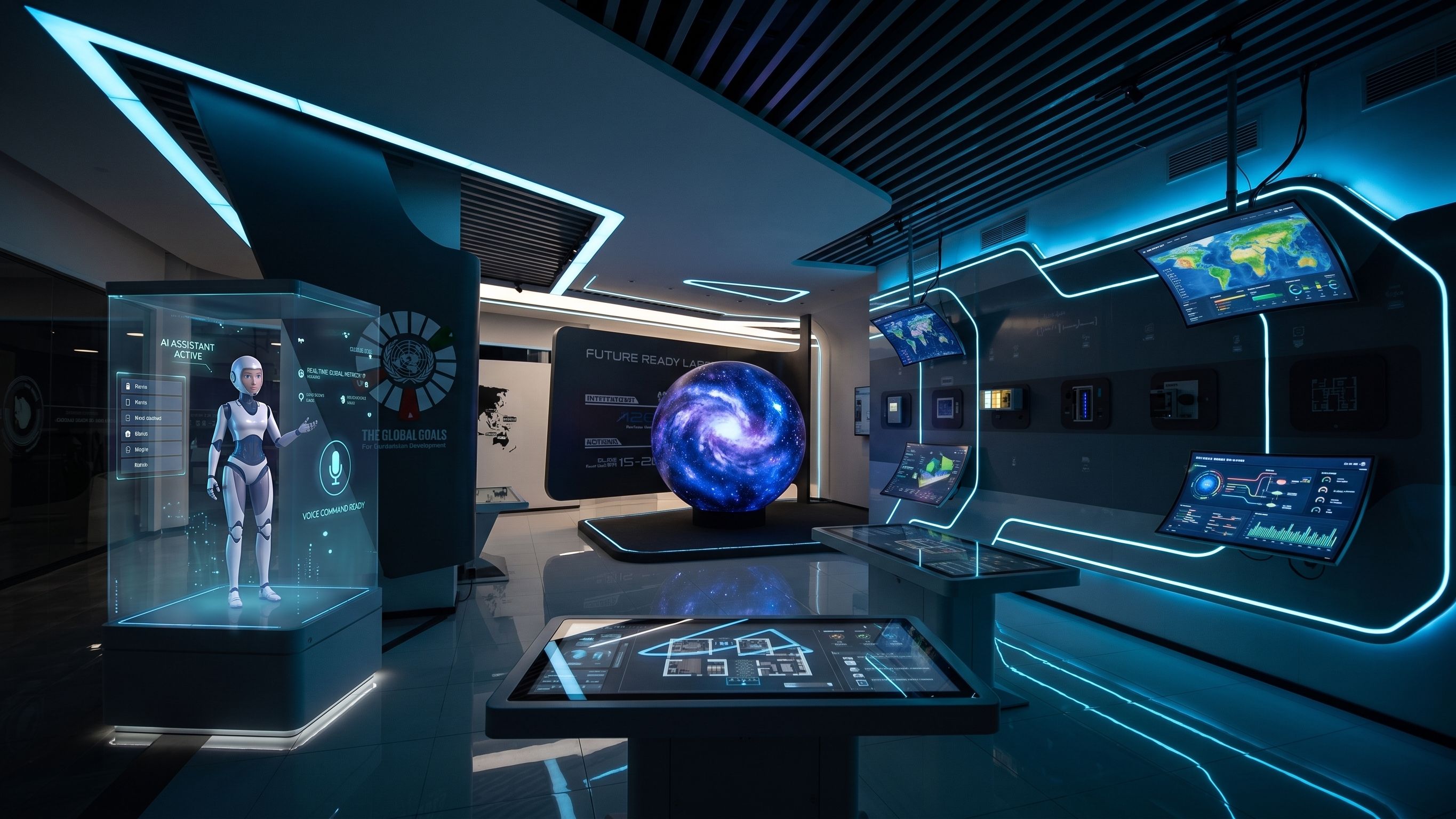
We design and build immersive experiences that engage, excite and transform audience interaction combining art, engineering, and next-gen technology to bring brands and spaces to life.