Services

Tech Concepts
Events & Experiences
Enterprise & Training
Gaming & Education


A clear guide to immersive experiences: what they are, the five main types of immersive technology, how multi-sensory design works, how immersive differs from interactive, and real examples from a Dubai team that builds them.
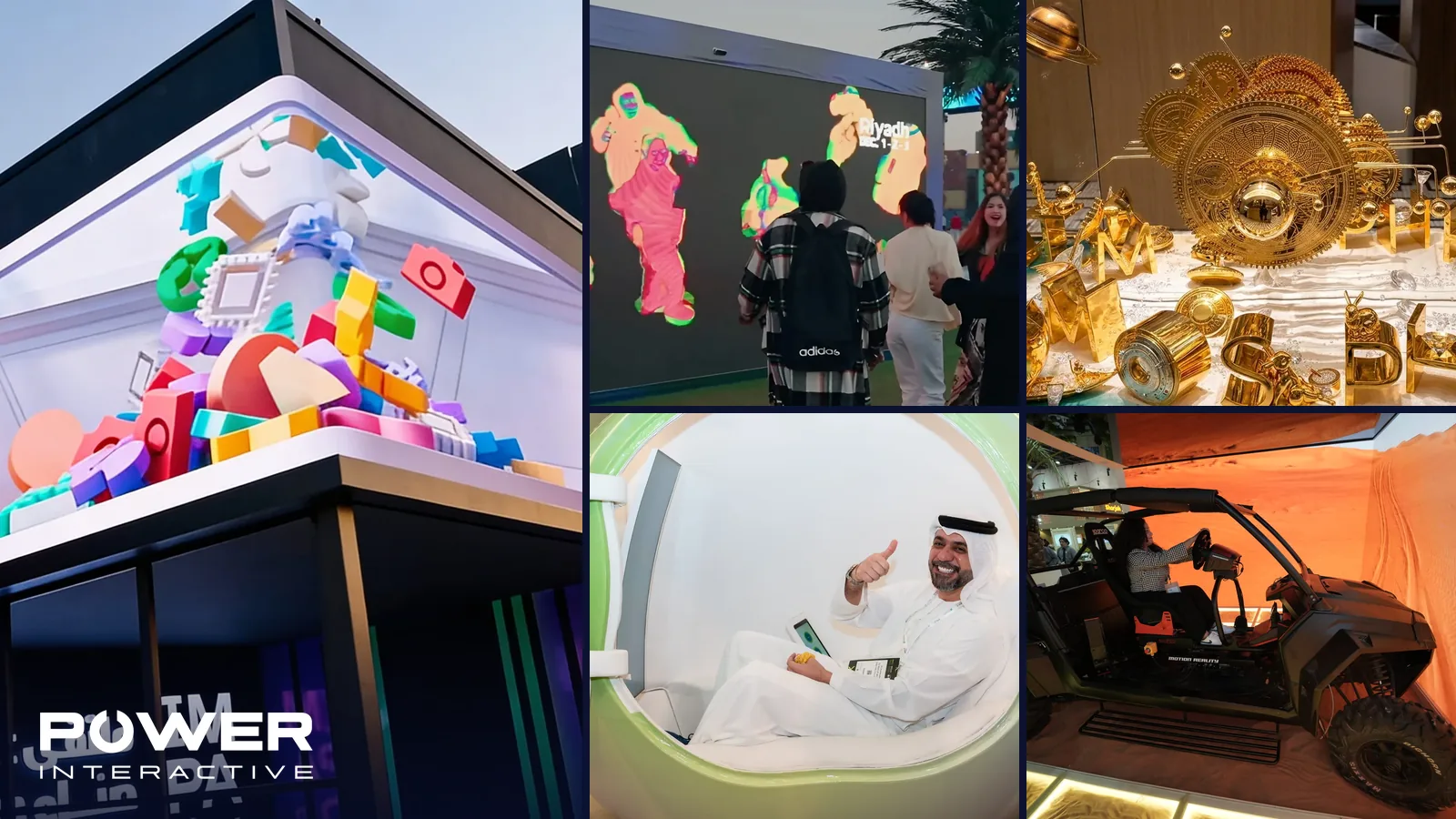
The term is now used for everything from art museums to exhibition stands, which makes it hard to know what it really means. This guide gives you a plain definition, explains the main types of immersive technology and shows how immersive differs from interactive.
We build these experiences for a living. Power Interactive is a Dubai-based experiential technology company with more than 800 projects delivered since 2018, so the examples below are real projects, including what they used and why.
QUICK ANSWER: An immersive experience is an environment or activity that surrounds a person with content, sound or physical effects, so that they feel present inside it rather than watching it from outside. The strongest examples block out the real world and hold a person's full attention.
Researchers separate two ideas that are often mixed up. In their 1997 framework, Mel Slater and Sylvia Wilbur described immersion as an objective property of the technology, such as how much of your view it fills. Presence is the subjective result: the feeling of being there.
That distinction matters when you are planning a project. You buy immersion, but what you actually want is presence. A huge screen with weak content delivers plenty of the first and very little of the second. Slater later described this as place illusion: the strong sense of being in a place even though you know you are not really there.
In our experience, four things create that feeling:
Interest in the category is growing. Kings Research valued the global immersive technology market at USD 49.04 billion in 2025 and projects USD 294.65 billion by 2033, with adoption in the Middle East and Africa supported by smart city and digital transformation programmes. Estimates vary by publisher, so treat the numbers as a direction rather than a fact.
QUICK ANSWER: The five main types of immersive technology are virtual reality (VR), augmented reality (AR), mixed reality (MR), projection and LED environments, and multi-sensory technology such as spatial audio and haptics. There is no single official list, and most large projects combine several of them.
| Type | What it does | Wearable needed? | Best for |
|---|---|---|---|
| Virtual reality (VR) | Replaces your surroundings with a digital world | Yes, a headset | Training, simulation, one person at a time |
| Augmented reality (AR) | Adds digital content on top of the real world | Usually a phone, or glasses | Public games, heritage, product visualisation |
| Mixed reality (MR) | Places digital objects in your real space, where they can respond to it | Yes, a headset or glasses | Complex products, design review |
| Projection and LED environments | Wraps walls, floors, domes or rooms in content | No | Groups, events, experience centres |
| Multi-sensory technology | Adds spatial audio, haptics, or other physical effects | Sometimes, such as a haptic vest | Deepening any of the formats above |
Here is how each type looks in practice, using our own projects.
VR. For Emirates, we built a VR tour of Terminal 3 that lets travellers with accessibility requirements explore the airport at their own pace before they travel.
AR. For Dubai's RTA, we built an AR game that sent players across metro stations to solve clues and collect AR coins. At Cityscape Saudi, an AR heritage experience formed part of the Mecca investment stand.
Projection and LED. For the Zayed Sustainability Prize at Masdar City, we paired a 360° curved LED with synced floor projection, with content composited for both surfaces so visitors stood inside a single picture.
Haptics. At LEAP 2025, we combined a Brelyon immersive screen with haptic feedback, so visitors felt the content as well as seeing it.
You can see the full range on our AR, VR and MR experiences and projection mapping pages.
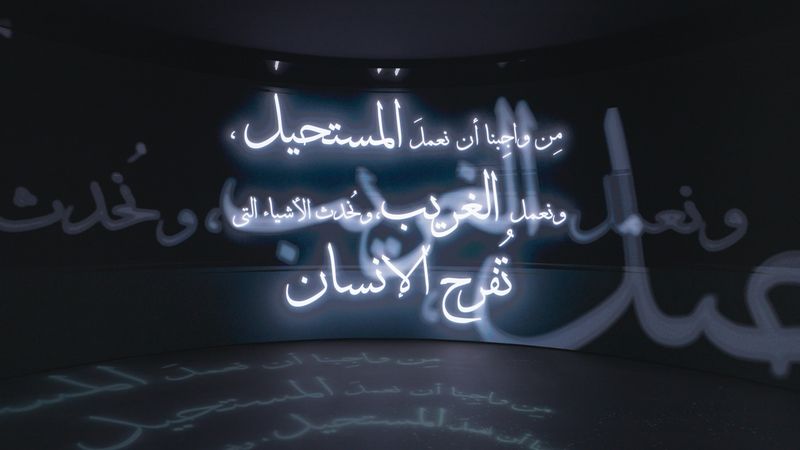
QUICK ANSWER: A multi-sensory experience engages more than one sense at the same time, usually sight and sound plus touch, movement or environment. Using several senses together makes an experience feel more believable, and research suggests it can also help people remember it.
Most brand content only reaches the eyes and ears, and often only one at a time. A multi-sensory experience adds layers that a screen cannot provide.
| Sense | How it is added | Real example |
|---|---|---|
| Sight | LED, projection, holograms, lighting | Curved LED and floor projection |
| Sound | Spatial audio and directional speakers | Directional audio zones on the Experience Abu Dhabi stand |
| Touch | Haptics, tactile objects, touch-reactive floors | Haptic feedback at LEAP 2025 |
| Movement | Motion, simulators, physical effort | Speed-responsive treadmill for Under Armour |
| Space | Enclosed pods, tunnels, rooms | Interactive wellbeing pod for Dubai Health |
The evidence is encouraging but still developing. A 2024 paper in Cranfield University's research repository found that combining senses improved short-term recall. Be careful with the bold percentages often quoted online for sensory marketing, since many cannot be traced to a real study.
The Experience Abu Dhabi stand at Arabian Travel Market is a good example. We created a multi-zone sensory stand where LiDAR floor and wall interactives brought Yas Island to life, while a touchscreen with directional speakers delivered the sound of Al Ain and Al Dhafra only to the person standing there. In a loud exhibition hall, that focused audio is what makes the zone feel separate.
QUICK ANSWER: Immersive describes how deeply an experience surrounds you. Interactive describes whether you can change what happens. A film in a dome is immersive but not interactive, a touchscreen is interactive but not immersive, and the strongest projects are both.
| Immersive | Interactive | |
|---|---|---|
| Core question | Do I feel inside it? | Does it respond to me? |
| The visitor's role | Present in the experience | In control of the experience |
| Typical tools | Domes, LED rooms, VR, spatial audio | Touchscreens, body tracking, sensors, games |
| Capacity | Often higher, as groups can share it | Often lower, as one person may lead |
| Memorable because | Of the feeling | Of what the visitor did |
| Simple example | A film in a projection dome | A product touchscreen |
The two are not rivals. Think of immersion as the world and interactivity as the visitor's part in it. Choosing the balance is a design decision: if you need to move a large crowd through in a set time, lean towards immersive. If you need each person to explore a detailed subject, lean towards interactive.
QUICK ANSWER: Examples of immersive experiences include immersive art museums, projection domes, LED rooms, VR simulators, themed attractions and kinetic installations. Public examples include teamLab Phenomena in Abu Dhabi. The projects below show the same ideas applied to brands, government and education.
A well-known public example in the UAE is teamLab Phenomena Abu Dhabi, which opened on Saadiyat Cultural District in April 2025. It shows how far the category has moved beyond headsets. Brands use the same principles at a smaller scale and with a tighter objective, and immersive does not have to mean digital. Physical movement can be just as absorbing as a screen.
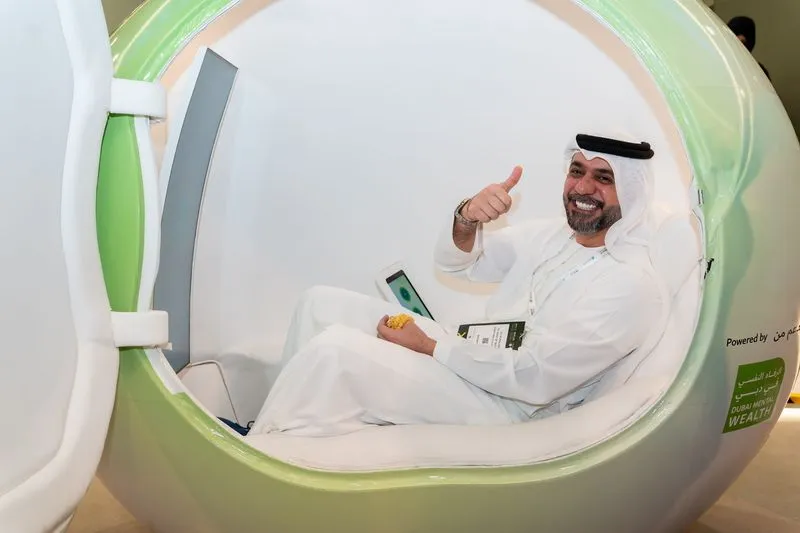
With Team71, a multi-environment wellness installation at World Health Expo 2026, combining an AI holographic guide, a dome and a pod.
View case study →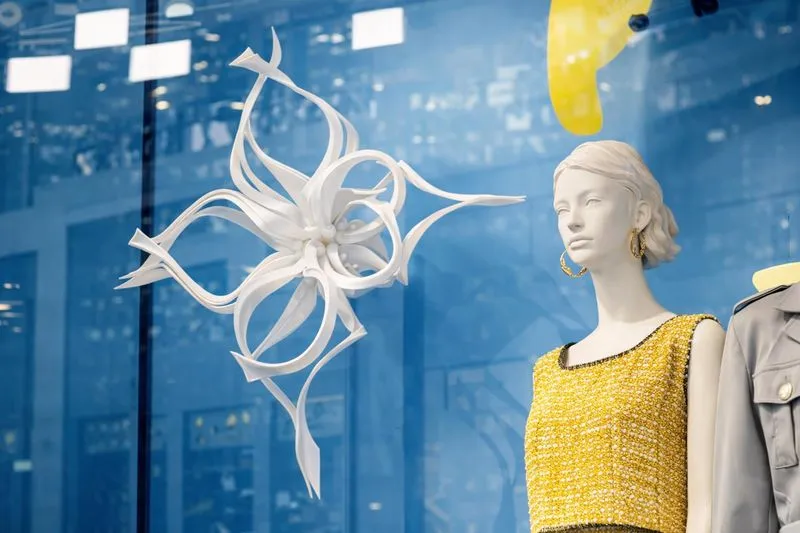
Animatronic jellyfish and sea lily sculptures for flagship stores in London, Australia and South Korea.
View case study →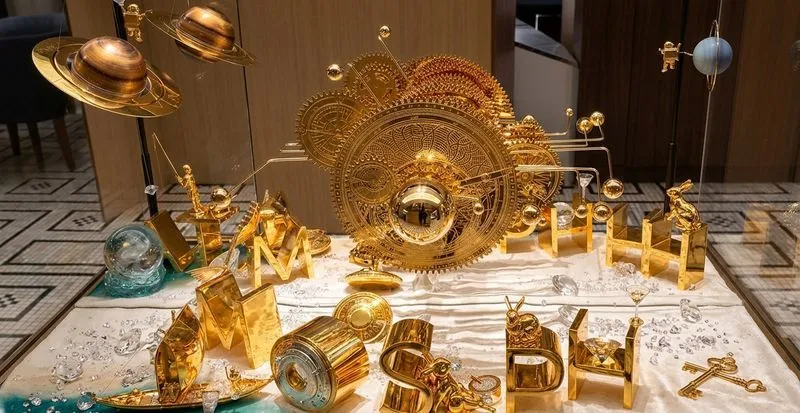
A gold-plated moving sculpture with more than 40 mechanical elements, made for At.mosphere at Burj Khalifa.
View case study →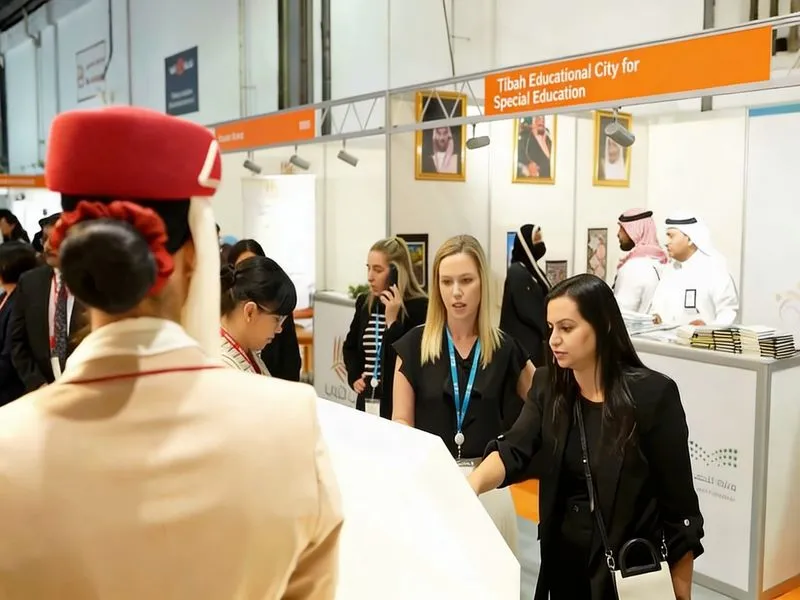
A virtual Terminal 3 that helps travellers with accessibility requirements prepare for the airport before they arrive.
View case study →
Immersive rooms can also take visitors somewhere they could not otherwise go. For ADNOC Technical Academy, we filmed restricted training areas in 360 degrees and mapped them onto an immersive room. As the creative director on the project put it, the aim was to communicate "what it feels like to be inside it."
QUICK ANSWER: An immersive interactive experience surrounds a visitor and also responds to them. Examples include body-tracking LED walls, laser tunnels that react to movement, simulators and interactive floors. It combines the feeling of immersion with the memory of having taken part.
This is where most of our event and exhibition work sits. A visitor who has changed the outcome tends to stay longer and has a clearer story to tell afterwards.
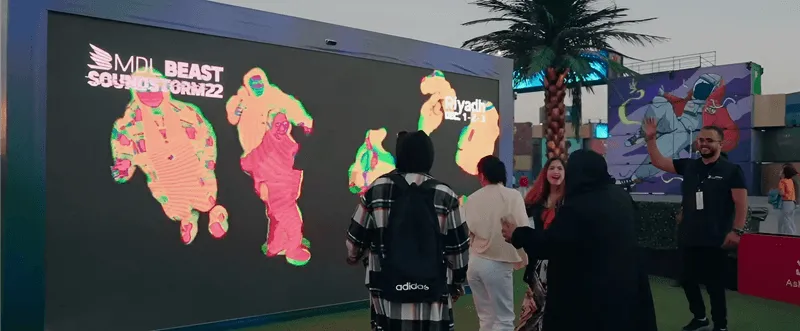
A 5 x 2.5 metre LED wall using real-time 3D body tracking. Three units across four locations.
View case study →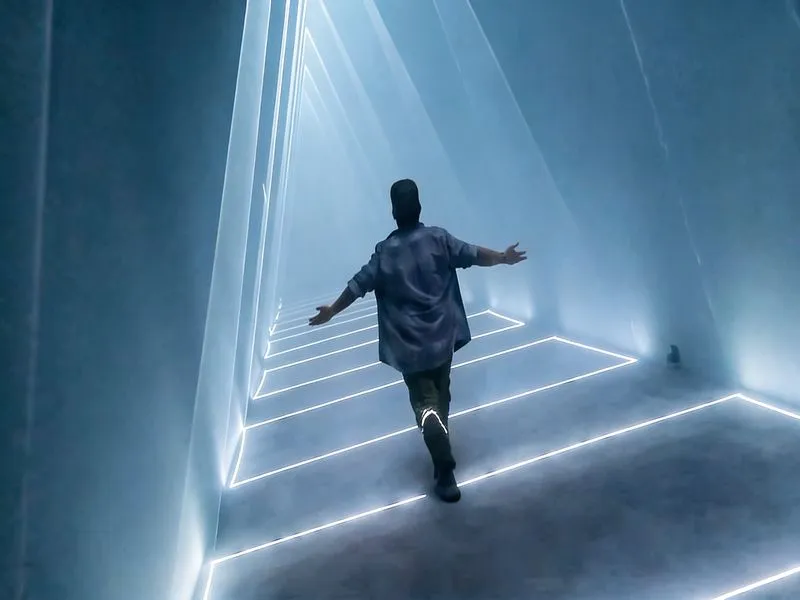
A laser tunnel that responds to visitors, plus a mirror tunnel with directional speakers and anamorphic content, in Riyadh.
View case study →
A dune-bashing ride with a wayfinding app and iPad experiences, built for a tourism stand at Arabian Travel Market 2026.
View case study →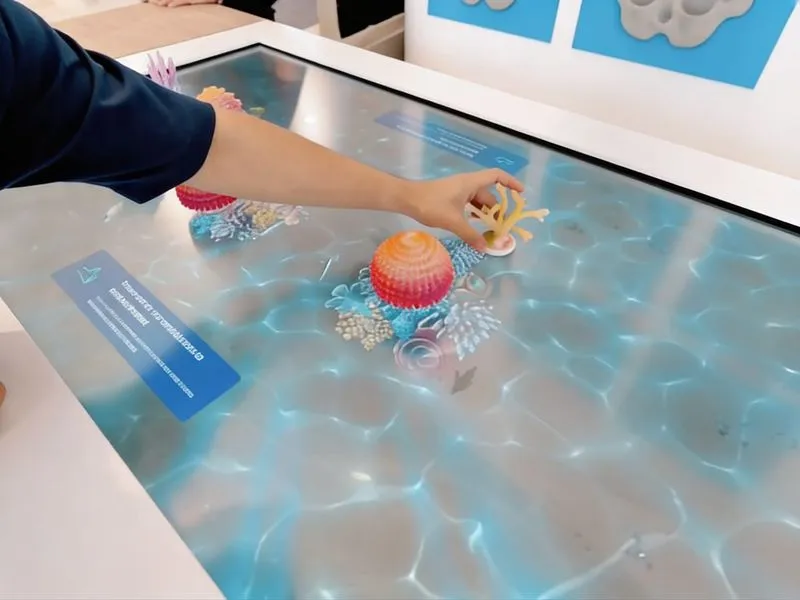
A LiDAR-powered table that turned coral reef restoration into something visitors could explore by hand.
View case study →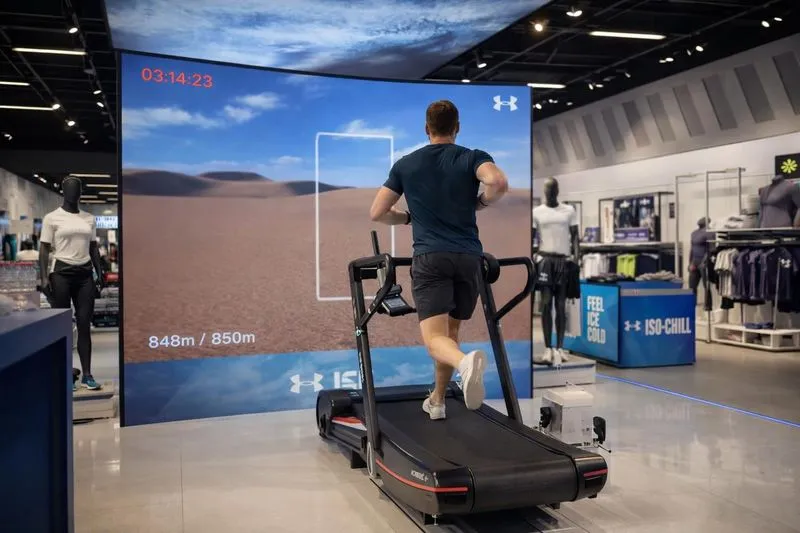
Six virtual environments that respond to running speed, with a live leaderboard that encourages repeat play.
View case study →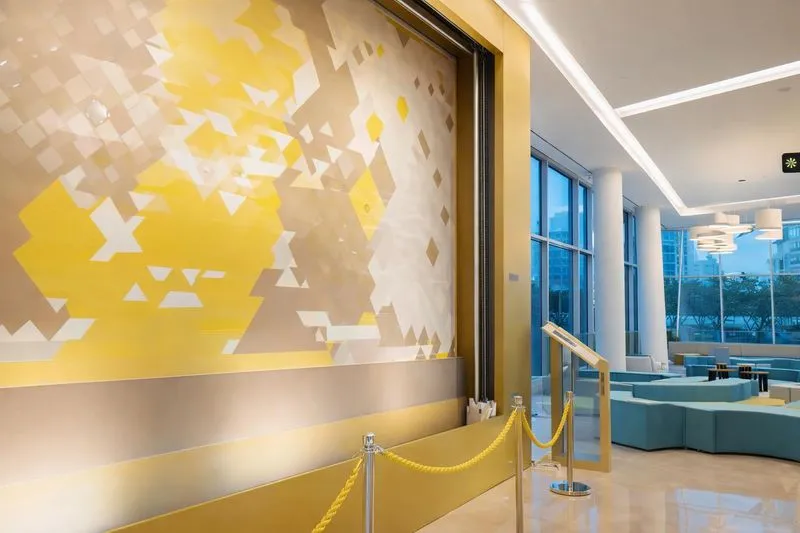
A robotic donor recognition wall that turns giving into a physical moment instead of a digital receipt.
View case study →
Decision-based storytelling is another route. At the World Government Summit, our mangrove experience for the UAE Ministry of Climate Change and Environment placed visitors at the centre of an environmental story, where their choices on a touchscreen shaped what happened next.
QUICK ANSWER: Exhibitors use immersive experiences to stop visitors, government entities to explain complex programmes, retailers to create a reason to visit, corporates to build experience centres, and educators to give access to places people cannot normally reach.
| Sector | Typical goal | What usually works |
|---|---|---|
| Exhibitions and events | Attract visitors and start conversations | Interactive event technology, simulators, tunnels |
| Government | Explain national programmes to delegations | LED rooms, decision-based stories, data tables |
| Corporate | Show strategy and capability permanently | Permanent installations and experience centres |
| Retail and malls | Create footfall and social sharing | Anamorphic LED, gamified challenges, kinetic pieces |
| Travel and tourism | Let people feel a destination before visiting | Sensory stands, simulators, VR |
| Education and training | Give safe access to real environments | 360° immersive rooms, VR simulators |
Permanent spaces need a different approach from events. For PwC in Riyadh, we built an immersive experience centre with a CMS so that content can be managed over time. For Visa, we delivered the Visa Arabia experience centre, and in Sharjah we worked with Simmetrico on the BEEAH Khalid Bin Sultan City experience centre, with transparent OLED, Holocube and panoramic LED. Our guide to experience centres covers this in more detail, and permanent installation vs event activation will help you choose.
QUICK ANSWER: Start with what visitors should feel and remember, then choose the technology that delivers it. The usual stages are objective, visitor journey, concept, content, technical design, build, on-site testing and support. Content and journey matter more than the size of the hardware.
The most common mistake is choosing the technology first. If you would like a template to follow, read how to brief an immersive experience project. For budgets, see our immersive experience cost guide.
QUICK ANSWER: The best immersive experience company for you is the one that has built something close to your project, controls its own content and software, tests on site and can support the experience once it is live. Ask for real case studies, not concept renders.
No independent ranking exists for this category, so be careful with any company that simply calls itself the best, ourselves included. Use these questions instead:
QUICK ANSWER: Power Interactive is a Dubai-based immersive and interactive experience company that designs, builds and runs experiences for brands, event agencies and government entities. We operate across the GCC and are expanding into Europe, with UK work delivered and a Barcelona project under way.
We have delivered more than 800 projects since 2018 across the UAE, Saudi Arabia, Oman and the wider GCC. Because we cover several disciplines in one team, we can recommend what suits the objective rather than what we happen to stock. That includes:
You can work with us in different ways: rent existing technology with content adapted to your brand, commission a custom build, or ask us to supply only the content for screens you already have. We also work behind the scenes for event agencies, as we did with Light Blue on three interactive experiences for Julius Baer at the Museum of the Future.
Our work is also travelling further. Our kinetic installations for Louis Vuitton have appeared in London, Australia and South Korea, and we are now building our presence in Europe. If you are planning an activation in the UK or Spain, we would be glad to talk.
Tell us about your project, or browse our case studies and Tech Concepts to see what is possible. You can also reach us at sales_bd@powerdxb.com or +971 58 865 0673.
Author: Mohamed Sorkatti is Director of Operations at Power Interactive, a Dubai-based experiential technology company with more than 800 projects delivered since 2018.
Reviewed by Fahad Javaid, Founder and CEO, Power Interactive. Last updated November 2026.


An immersive experience is one that surrounds a person with content, sound or physical effects so completely that they feel inside it rather than watching it. It can use a headset, but many of the best examples use LED rooms, projection, audio and physical installations that need no headset.
No. VR is only one type of immersive technology. LED rooms, projection domes, walk-through tunnels and kinetic installations are all immersive, and all can be experienced without wearing anything. At events, headset-free formats usually suit groups better, because several people can share them at once.
Experiential describes the marketing approach: a brand gives people something to do or feel rather than something to read. Immersive describes how deeply the experience surrounds them. An experiential activation can be a simple game on a touchscreen, which is experiential but not immersive.
Immersive experience is the overall category. VR replaces your surroundings with a digital world, while AR adds digital content to the real world, usually through a phone or glasses. Both can be used to build an immersive experience, and so can LED, projection, audio and physical effects.
It depends on the format, size, content and duration. Renting existing technology with adapted content costs far less than a custom build, and a permanent installation needs a long-term plan for maintenance. Our immersive experience cost guide explains what drives the budget.
Decide what success means before the build, then design the measurement into the experience. Common measures include participation, time spent, leads captured through QR or registration, repeat plays and content shared by visitors. Which ones matter depends on your objective.
Yes. Immersive formats work well for complex subjects such as sustainability, national strategy and infrastructure, because visitors can experience a topic rather than read about it. Past examples include our decision-based mangrove dome for the UAE Ministry of Climate Change and Environment at the World Government Summit.
Power Interactive is based in Dubai and operates across the UAE, Saudi Arabia, Oman and the wider GCC. We are also expanding into Europe, with work already delivered in the UK and a project under way in Barcelona.

Power Interactive is a Dubai-based experiential technology company, building immersive experiences, interactive installations and Pro AV systems for clients across the UAE, Saudi Arabia and the GCC.